

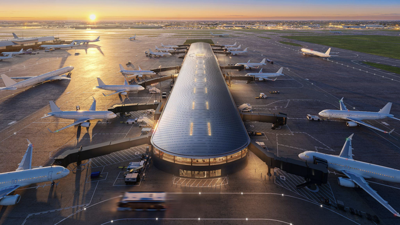
Chicago has broken ground on a new O’Hare Concourse E, a $917 million project that will add 24 gates and create more space for passengers at O’Hare International Airport. The expansion is part of ORDNext, the airport’s broader modernization program, and is designed to support construction of a future global terminal.
The project will be built in two phases. The first phase will cost $640 million and is scheduled for completion in 2030, according to the City of Chicago’s press release. It will include 14 gates, about 315,000 square feet of passenger space and nearly 21,000 square feet for concessions. The full concourse is expected to reach 24 gates in 2034.
Subscribe to Chicago Star’s Weekly City Buzz Newsletter

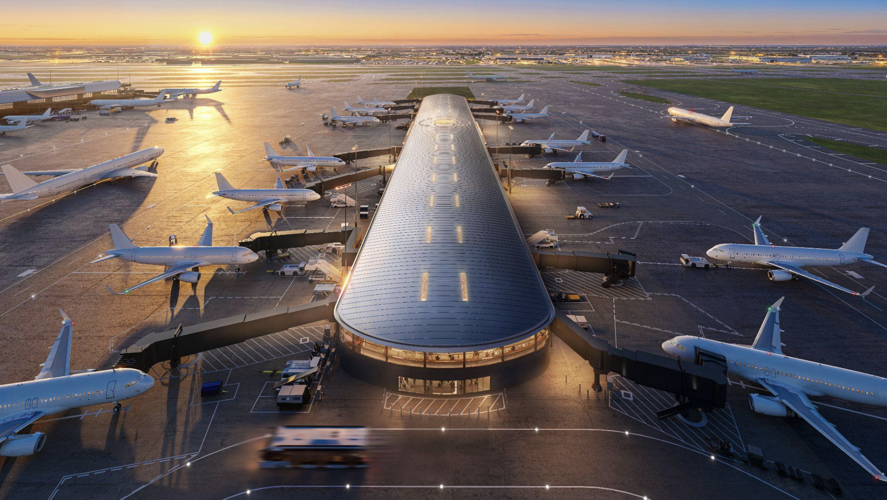
Concourse E Orchard Overlook | Courtesy of City of Chicago
Two-phase expansion
The second phase will cost $277 million and add 10 more gates after the O’Hare Global Terminal is completed in late 2033, the city confirmed. The schedule allows Concourse E to expand while limiting disruption to airport operations, according to the city’s announcement.
The first phase will include domestic-capable gates, passenger holdrooms with seating and a public art program. A new underground passenger tunnel will connect Concourse E with Concourse D, another ORDNext project that is scheduled for completion in late 2028.
Chicago officials updated the construction sequence so work on the first phase of Concourse E can proceed alongside Concourse D. The approach is intended to add gates sooner and provide capacity needed for the accelerated construction of the O’Hare Global Terminal.

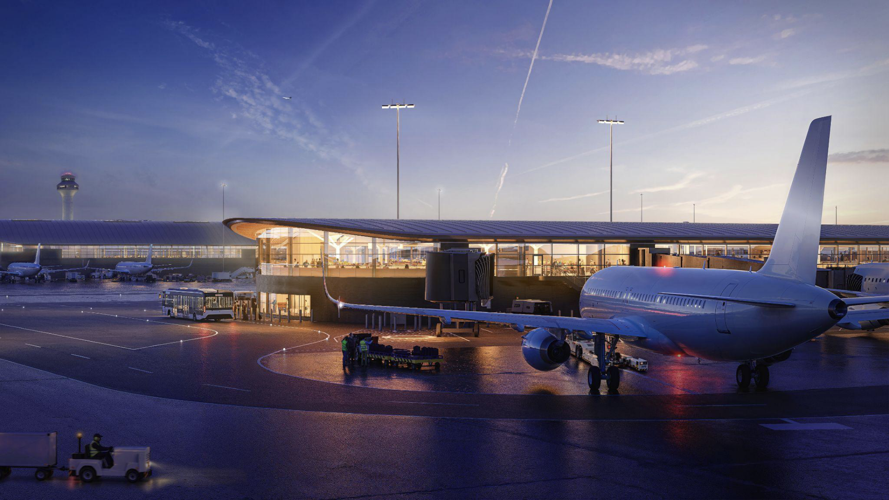
Concourse E Approach | Courtesy of City of Chicago
Read more on Chicago Star
O’Hare, one of the nation’s busiest airports, to break ground on the New Concourse E
Chicago keeps bringing the heat! O’Hare sets summer record with 25 million travelers
A bug in the system: Chase, other banks go down after Microsoft & FAA chaos—what’s next?
Chicago’s dining scene goes head to head with NYC in OpenTable’s 2026 Top 100 Restaurants
Beloved Chicago-area toy brand Magna-Tiles snaps together new Bolingbrook headquarters
Kraft Heinz spills the beans: Historic coffee brands sold off in $650 million mega-deal
Building a comeback: Lego signs for massive new Mag Mile flagship, leaving Water Tower Place
Design inspired by Chicago
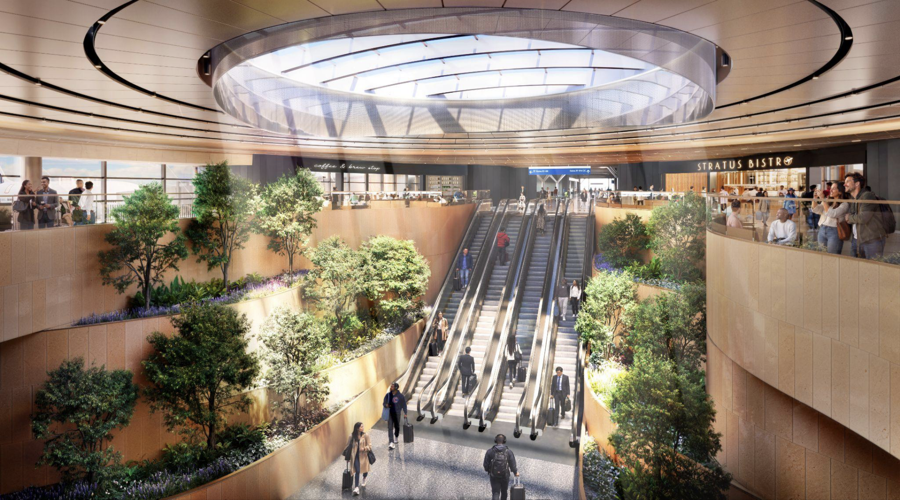
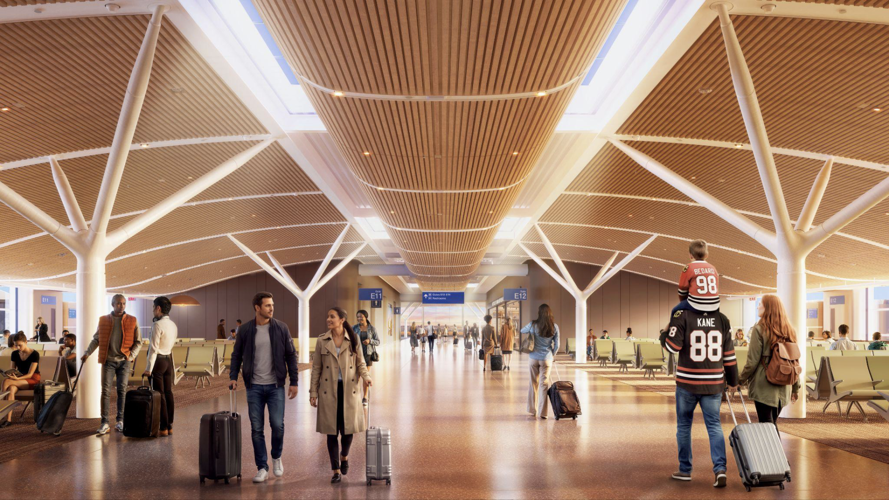
Renderings show a two-level concourse stretching more than 1,000 feet. The design team, led by Skidmore, Owings & Merrill with Ross Barney Architects, Juan Gabriel Moreno Architects and Arup, plans light-filled spaces influenced by Chicago and the natural landscape of the Midwest, according to the City of Chicago.

Concourse E Arrivals and Departures | Courtesy of City of Chicago
The design also anticipates future growth. A curtain-wall system at the southern end will be relocated and reused when the second phase adds gates, helping reduce construction disruptions. Utility infrastructure will be installed around the concourse to support its planned expansion.
Mayor Brandon Johnson said the investment will create jobs, expand airport capacity and strengthen O’Hare’s role as a global aviation hub, per the press release. United Airlines and American Airlines also described the project as a step toward a more modern passenger experience and stronger connections from Chicago, according to the city’s announcement.
Concourse D, Concourse E, and the O’Hare Global Terminal form the centerpiece of ORDNext. When completed, the program is expected to increase O’Hare’s gate capacity by about 14%, creating room for additional routes and destinations.




(0) comments
Welcome to the discussion.
Log In
Keep it Clean. Please avoid obscene, vulgar, lewd, racist or sexually-oriented language.
PLEASE TURN OFF YOUR CAPS LOCK.
Don't Threaten. Threats of harming another person will not be tolerated.
Be Truthful. Don't knowingly lie about anyone or anything.
Be Nice. No racism, sexism or any sort of -ism that is degrading to another person.
Be Proactive. Use the 'Report' link on each comment to let us know of abusive posts.
Share with Us. We'd love to hear eyewitness accounts, the history behind an article.