

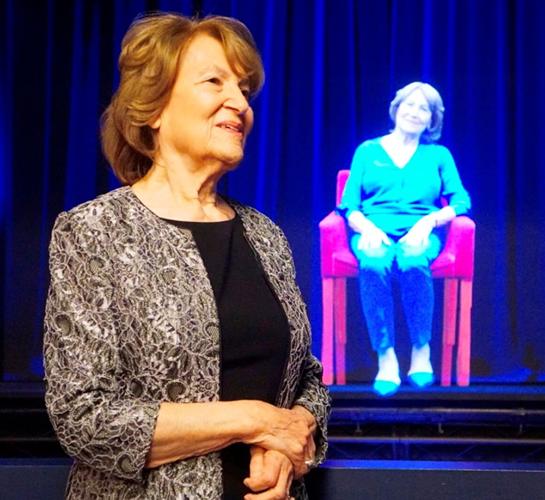

The late Fritzie Fritzshall in front of her hologram in Illinois Holocaust Museum's Survivor Stories Experience.
In recognition of Holocaust Remembrance Day (Yom HaShoah, April 28), we take a visit to the Illinois Holocaust Museum & Education Center, the third largest in the country. It is a life-changing experience and a place everyone should see. With over 20,000 artifacts belonging to Holocaust victims and Survivors, it is a necessary and important repository of the atrocities that affected so many innocents.

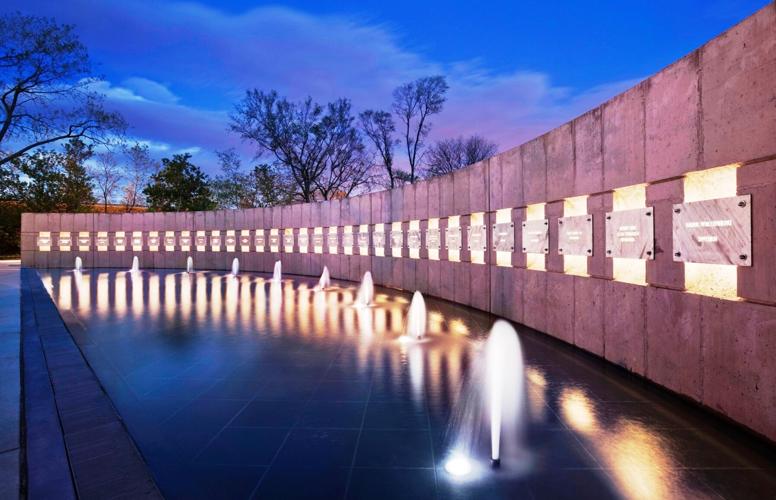
Ferro Fountain of the Righteous. (Photo by David Siede)
On my first visit, I wasn't sure what to expect. The grounds are magnificent and the building stands like a sentinel at 9603 Woods Drive in Skokie. Renowned architect Stanley Tigerman created the 65,000-square-foot space with one theme in mind, "the journey from darkness into light."
The building is steeped in symbolism. The "dark' wing faces southeast towards Jerusalem while the "light" wing faces due east in anticipation of a Messianic Age, the future period of time on Earth in which the messiah will bring universal peace and brotherhood. Crowning the Museum's exterior are six points of light, representing the six million Jews who perished. The Fountain of the Righteous (seen as you enter the building) honors families who protected Jews; each name on the wall has a connection to a Survivor who settled in the Midwest.
Once inside, visitors automatically lower their voices in reverence, especially in The Abe & Ida Cooper Survivor Stories Experience. Making its world debut in 2017, this experience was named one of the 12 must-see exhibitions globally by Smithsonian Magazine and was featured on 60 Minutes. It is the first of its kind to focus on Holocaust remembrance and education and features life-size interactive holograms of 13 Survivors (7 from Chicagoland) who tell their stories and can answer questions from the audience in real time.

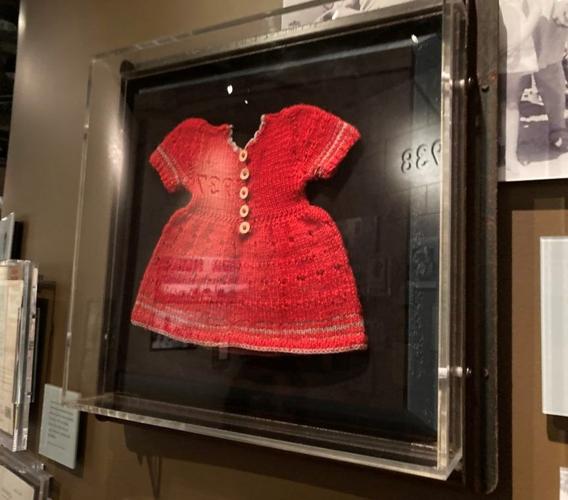
This red sweater belonged to a toddler who escaped the Holocaust because her family fled to Shanghai.
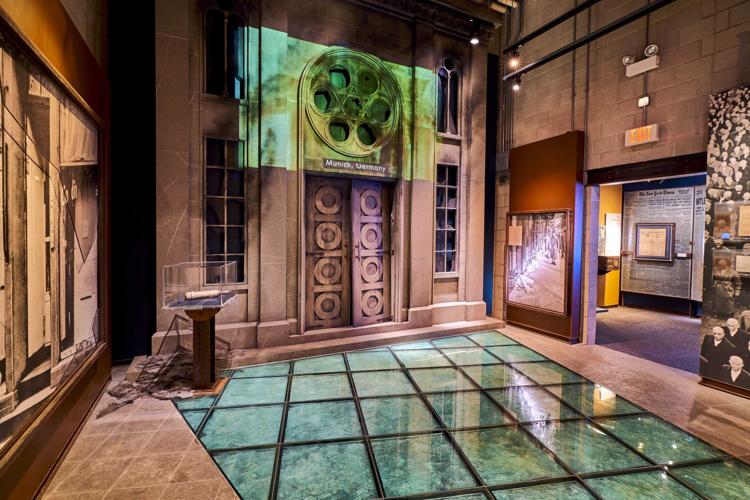
As you walk through the Ziv and Shifra Karkomi Permanent Exhibition, you will see over 500 artifacts including pre-war wedding photos and baby clothes. A tiny, bright red knit baby dress is on display stitched by Martha Frankenstein in 1941, three years after Kristallnacht. The name literally means "crystal night" and comes from the shards of broken glass that covered the streets after the windows of Jewish-owned stores, buildings and synagogues were smashed. The Museum has a floor made of shattered glass to symbolize this horrific night, November 9, 1938, which marked the beginning of the Holocaust.

The shattered glass floor representing Kristallnacht, which marked the beginning of the Holocaust.
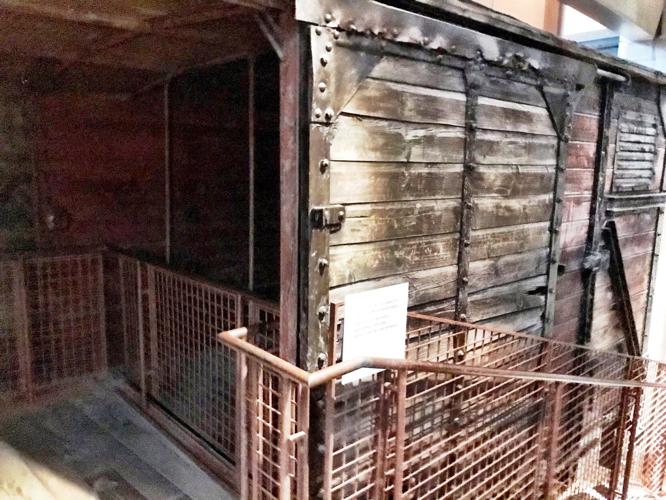
Also on view is a German boxcar which was the Museum's first major exhibit. The boxcar is a replica of the kind used to transport millions of Jews to Nazi concentration camps. The late Fritzie Fritzshall, a Survivor and past president of the Museum, said, "It may be many years later, but the smell and fear that was in that boxcar, that has not left me...There is no way to describe what it was like to be in the rail car hungry, cold, without water, watching pregnant women dying in front of you from lack of food, air and water. My own grandfather died in a car going to Auschwitz." Fritzie lost family members and endured a torturous year in Auschwitz and a Nazi labor camp before being liberated by the Soviet Army after escaping into a nearby forest during a death march.

German boxcar, similar to the type that carried millions of Jews to their deaths.
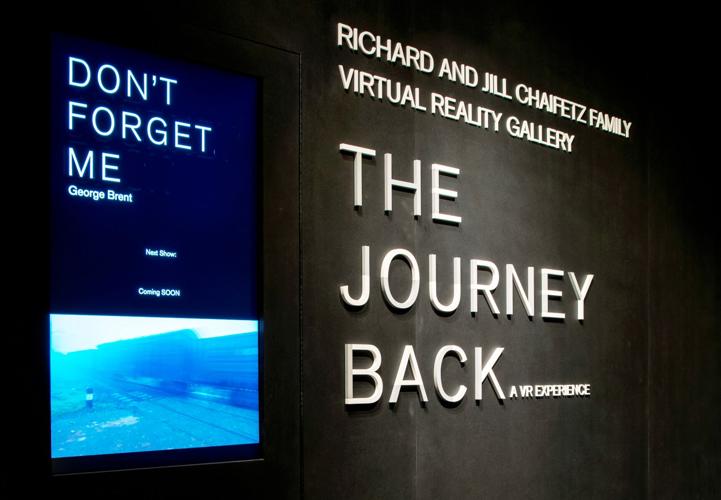
In another world-wide first, the Museum's virtual reality (VR) exhibit, The Journey Back, takes you on a tour back to Holocaust sites as seen through the eyes of Survivors. The experience includes two VR films, each about 15 minutes long. The first, "A Promise Kept" follows 13-year-old Fritzie as she "fulfills her promise to the 599 women who saved her life while imprisoned together." And "Don't Forget Me" follows George Brent's journey through the Auschwitz, Mauthausen, and Ebensee concentration camps. With 360-degree sound and visuals, visitors will be guided around present-day preserved concentration camps by the people who survived them. Susan Abrams, IMEC president, said, "In both Fritzie and George's films, there is an essential understanding that these stories need to be carried on. We need to learn all we can from Holocaust Survivors while they are still here."

VR Exhibition Space, The Journey Back Gallery (Photo by Emily Mohney)
Despite the horrors on display, the Museum is a place of love and hope, encouraging visitors to never forget the past and to become "upstanders" instead of "bystanders." In the Take a Stand Lab, interactive kiosks encourage visitors to get involved and make their voices heard. It also spotlights the stories and strategies of individuals and organizations that have made a positive difference in their communities.
Current exhibits at the Museum include Rise Up: Stonewall and the LGBTQ Rights Movement, which explores the June 1969 police raid of the Stonewall Inn that ignited the gay rights movement in our country. Chief Curator of Collections and Exhibitions, Arielle Weininger, says, "Rise Up tells the story of how ordinary Americans used their First Amendment freedoms: freedom of speech, the press, petition, assembly, and religion, to demand an end to discrimination and change society." (This exhibit runs through May 8, 2022)
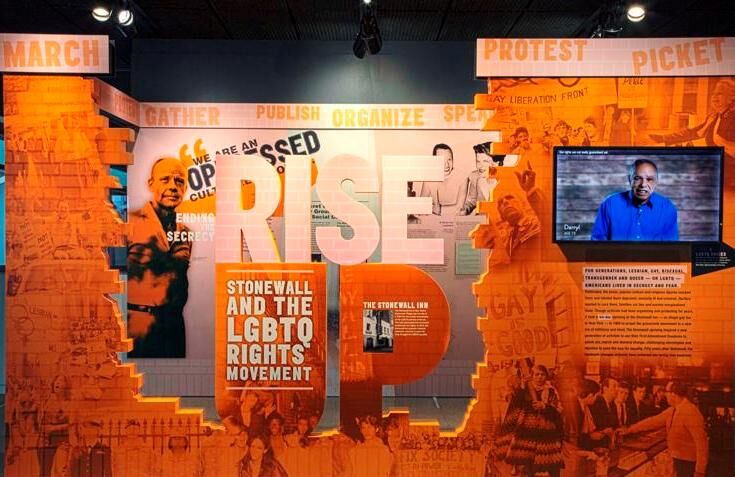
The Illinois Holocaust Museum's Rise Up Stonewall and the LGBTQ Rights Movement exhibit, now through May 8.
Shanghai: Safe Haven During the Holocaust is another powerful exhibit at the Museum now through September 5, 2022. This exhibit features 22 large scale photographs by renowned photojournalist Arthur Rothstein which illuminates everyday life in Shanghai's 1-square-mile Hongkew District. The images, and accompanying artifacts, provide visitors with a glimpse of what life was like for the "stateless Jewish refugees" seeking sanctuary from Nazi persecution in this cramped, disease ridden ghetto. Local Shanghai ghetto Survivor Doris Fogel said, "Sharing one room with four other people for five years, going without tap water for nearly a decade, using a bucket as a lavatory...It was the poorest part of Shanghai. It made me tough and street smart and taught me how to take care of myself."
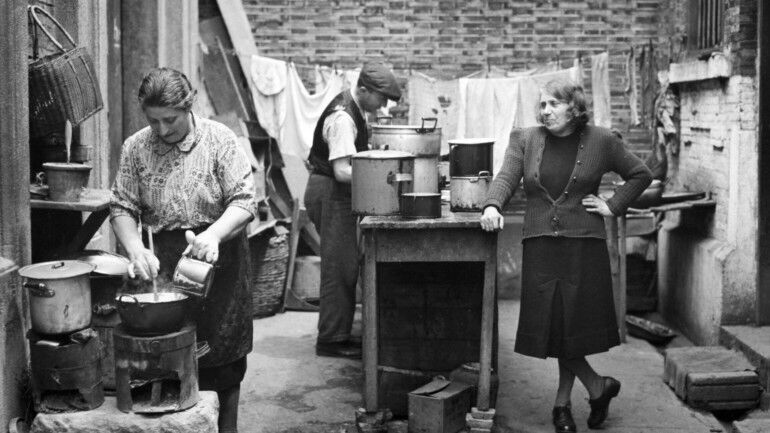
Twenty-two black-and-white photographs by photojournalist Arthur Rothstein show a harsh existence in the Shanghai ghetto for thousands of Jews during the Second World War.
Touring the Museum was tough, inspiring and enlightening. Seeing all of the artifacts, memorabilia, propaganda and more, was heart wrenching, but no one should ever look away. The Museum's mission is expressed in its founding principle: "Remember the Past, Transform the Future." The Survivors expect this from us so be an upstander and visit when you can.

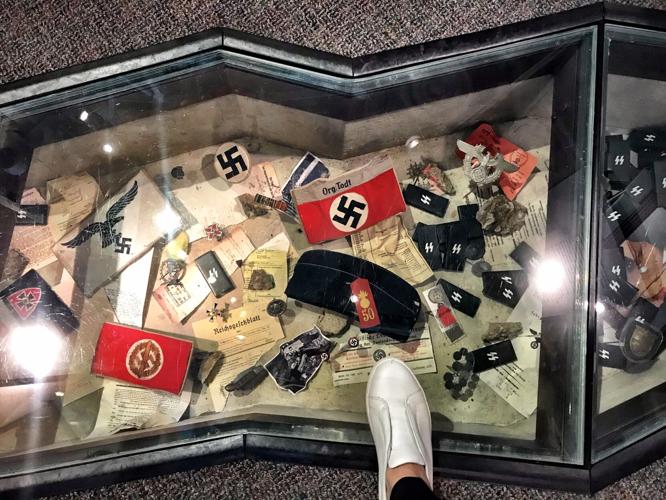
Walking on Nazi artifacts in an exhibit.
(Holocaust Remembrance Day, Yom HaShoah, falls on April 28 this year. This is a day of commemoration for the six million Jewish victims of the Holocaust. This might sound similar to International Holocaust Remembrance Day, which takes place in January, but these are actually two different occasions. Yom HaShoah is the Jewish community’s day for internal reflection. In comparison, International Holocaust Remembrance Day is meant for everyone, no matter their religion or ethnicity, to remember the victims of the Holocaust.)
(Illinois Holocaust Museum & Education Center, 9603 Woods Drive, Skokie, Illinois. Open Wednesday through Sunday from 10 am to 5 pm., ilholocaustmuseum.org)




(0) comments
Welcome to the discussion.
Log In
Keep it Clean. Please avoid obscene, vulgar, lewd, racist or sexually-oriented language.
PLEASE TURN OFF YOUR CAPS LOCK.
Don't Threaten. Threats of harming another person will not be tolerated.
Be Truthful. Don't knowingly lie about anyone or anything.
Be Nice. No racism, sexism or any sort of -ism that is degrading to another person.
Be Proactive. Use the 'Report' link on each comment to let us know of abusive posts.
Share with Us. We'd love to hear eyewitness accounts, the history behind an article.