

Every year, beekeepers from the Chicago Honey Co-op collect
about 1,500 pounds of sweet stuff from the hives of
nearly four-dozen honeybee colonies throughout the city,
including two in the Lurie Garden.
They get stung along the way, but the pain is nothing
compared to the reward of working with
nature’s astonishing little sugarmakers.
“We started harvesting the last week of July,” says Sydney Barton, one of roughly 19 members of the democratically controlled Chicago Honey Co-op that was formed in 2004. “We’ll continue to go until the end of October.”
Ms. Barton’s dedication to the trade began in 2003, when a friend invited her to help install a package of “about 6,000 or 8,000 bees” into a hive.
“A package is kind of a rectangular box that’s got screens on either side,” she explains. “The bees are shipped with a queen and sugar syrup to feed them.”
Although she describes the annual honey haul as “not a lot,” it’s enough to keep the Co-op as busy as a bee.
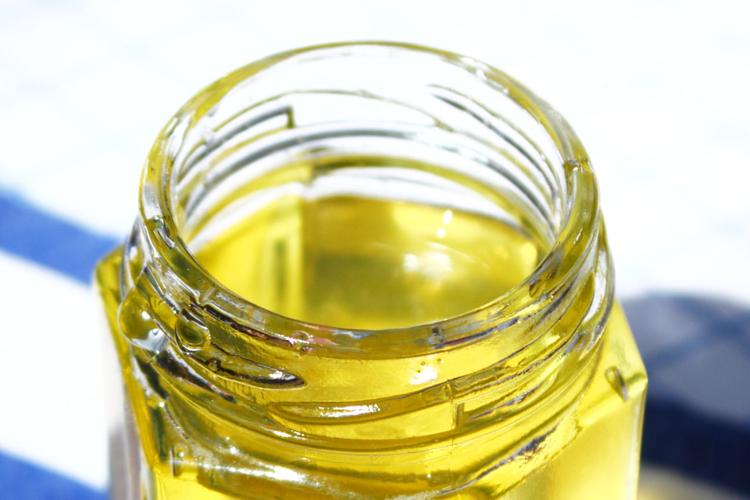
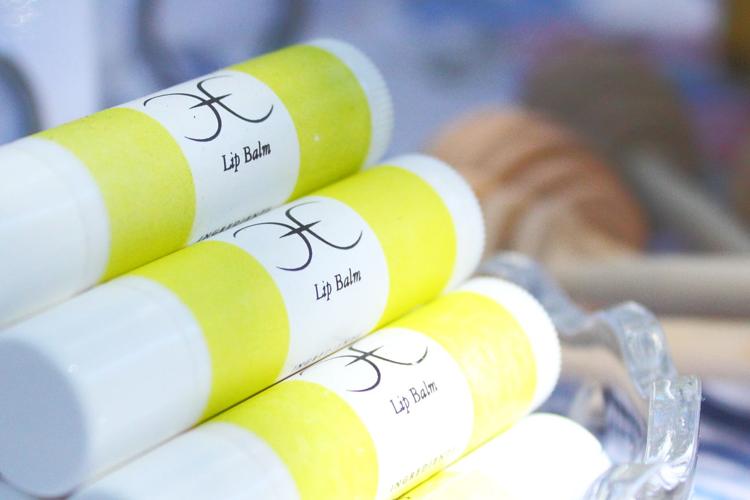
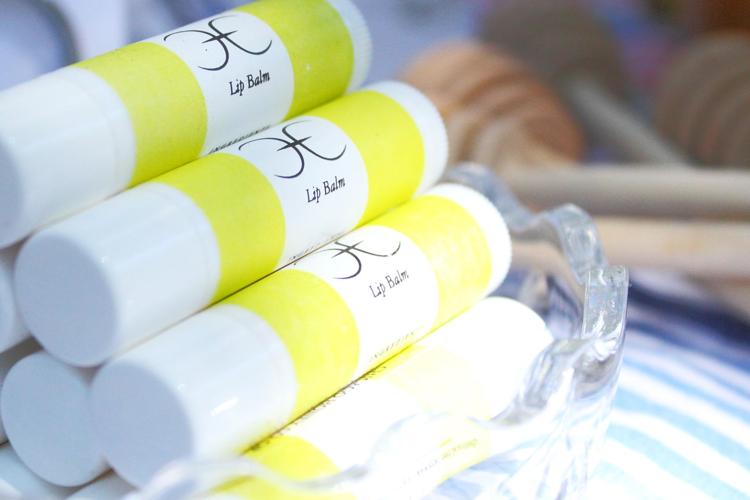
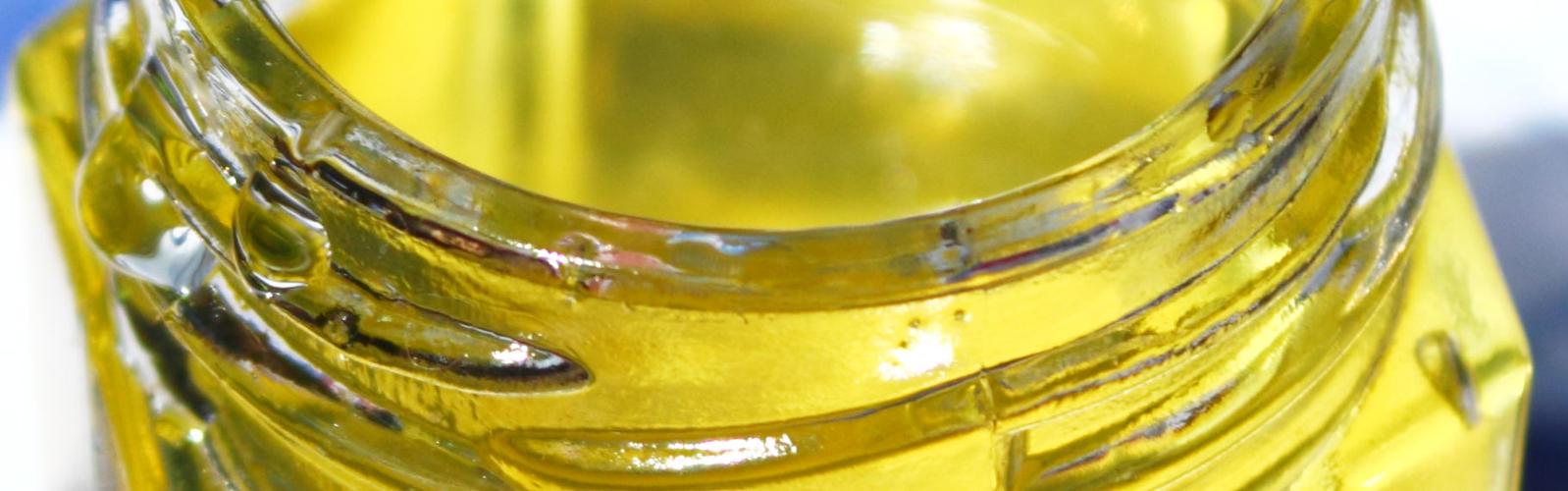
In the nonprofit’s workshop on the Near West Side, Ms. Barton spends 40+ hours each week helping to transform the sticky yield into lip balms, body bars, and glass jars of raw goodness that will be sold through its online store and in select farmers markets.
“Our body products are made with wax that came from the hives,” she says. “We add more ingredients, like cocoa butter and vegetable shortening. The beeswax helps to stabilize the bars.”
She also helps with a line of candles made with beeswax from a Michigan beekeeper that is heated to 160 degrees, liquefied, and poured into molds.
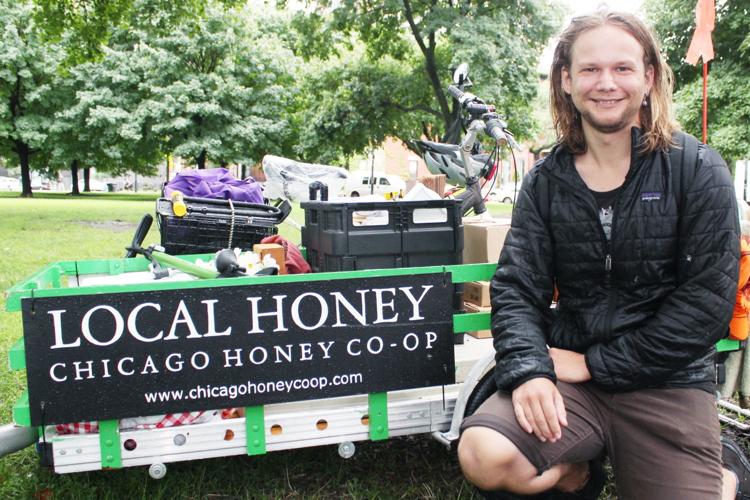
On Saturdays, she and other volunteers load the products — along with signage and a vendor booth — into a bicycle trailer and transport everything to Lincoln Park’s Green City Market. On Sundays, it’s off to the Logan Square Farmers Market.
Then the process of gathering the honey begins again.
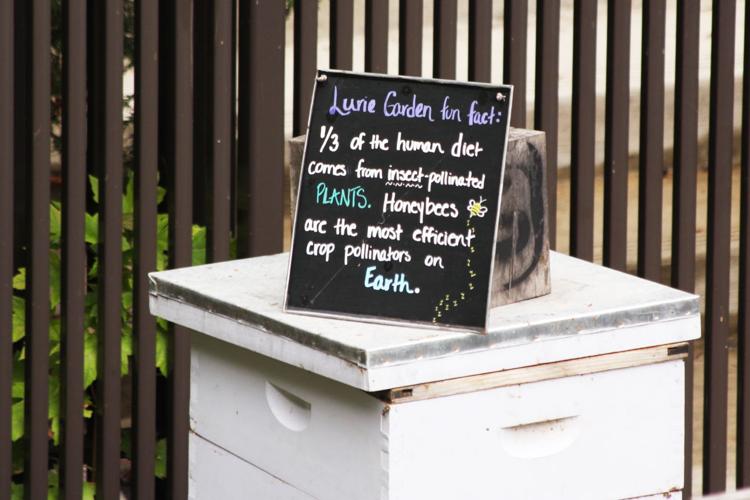
The hives at the Lurie Garden resemble an old bedroom dresser that someone left in a nondescript maintenance area behind a hedgerow. Tucked underneath the elevated walkway that leads to the Art Institute’s Modern Wing, they are easy to miss. But the activity within them is nothing short of miraculous.
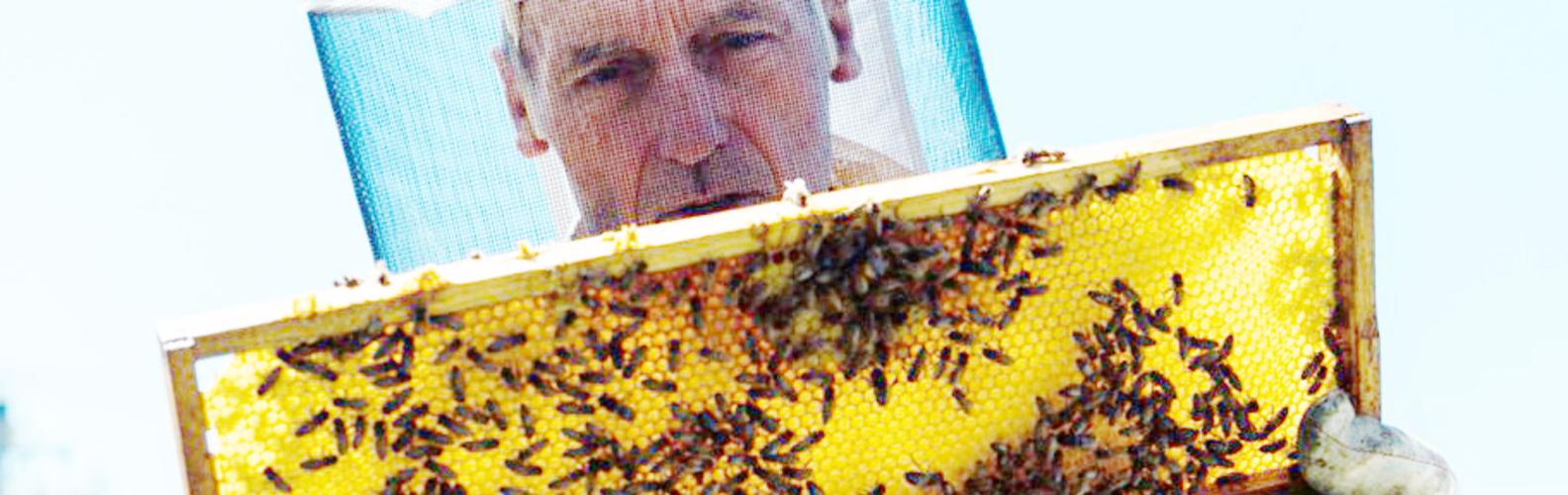
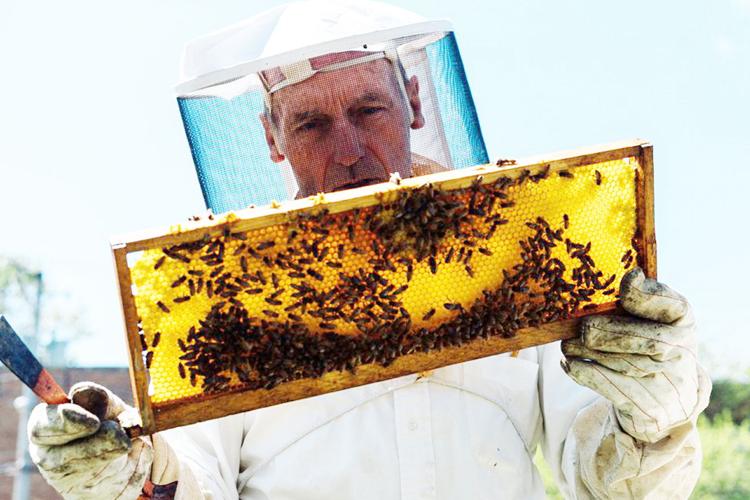
The “drawers” of the structure are individual square wooden boxes. Each box holds ten vertical frames that are about the size and shape of a shoebox lid. Each frame is prepared with a wax foundation upon which the honeybees build their entire society. There are areas for the queen and her attendants, the workers, the drones, the pupa, and the honey, which is stored in the uppermost box.
When it’s time to harvest, the beekeeper loosens the honey frames with a pry bar and removes them. A brush helps keep the bees away and, when necessary, a smoker prompts them to move deeper into the hive, an instinct developed over centuries of protecting the colony from forest fires.
The gear worn by the Co-Op’s beekeepers is relatively simple.
“At minimum we recommend a veil, so if you upset the bees, they don’t sting your face,” says Ms. Barton. “Most beginners will wear a whole bee suit, which we don’t bother with.”
Although she estimates that bees have stung her about a 100 times, she insists that the insects are harmless. “Their goal in life is to forage and get nectar and pollen,” she says. “When a beekeeper is working a hive, the bees are not paying attention to what he’s doing. When I’ve gotten stung it’s only been when I make contact with frames and I’ve accidently smashed a bee with my finger.”
After collecting the honey frames and removing the wax that covers the honey located on either side, the beekeeper arranges them like spokes on a wheel inside a cylindrical machine called an extractor. When the extractor is powered up, it spins the wheel and creates enough centrifugal force to pull the honey out of the wax, where it flows down to the bottom and through a honey gate.
“It’s like a faucet attached to the side of the extractor that you open to get the honey out,” explains Ms. Barton.
The technique is more labor intensive than the process followed by many large commercial suppliers, which often heat the honey to make it flow more easily.
“Their main interest is getting it into jars as soon as possible,” says Ms. Barton. “They call their honey pasteurized — okay, great — but you’ve also killed all the good stuff inside of it. You also lose the flavor.”
The good stuff includes a lot of residual pollen, one of the ingredients that has made beekeeper Jefferson Shuck a honey believer for years.
“I always had really bad allergies,” he explains. “It’s said that when you ingest the pollen in the honey, it helps your immune system fight pollen in the air. That works for me.”
Mr. Shuck came to Chicago from Missouri to pursue a career in massage therapy — “I wanted to make Chicago a healthy place,” he says. But after becoming involved with the Chicago Honey Co-Op, determined that he was not only helping people feel better, but also improving his own wellness. “You have to move intentional and slow,” he says. “It’s like tai-chi.”
When the harvest ends, he’ll help prepare the colonies for winter.
Before the cold arrives, the beekeepers will reduce the height of the hives to about three-feet — roughly 25% smaller than their summer size. This leaves the bees less area to heat, which they accomplish by beating their wings. The queen, who stops laying eggs in November, remains at the center. The rest will constantly rotate towards the middle so that everyone gets a chance to warm up. They’ll also leave the hive with about 70 pounds of honey for the bees to nourish themselves.
Despite all the preparations, the colony is not guaranteed to survive. Mr. Shuck is currently attempting to locally raise a number of queens, which usually come from California and the South, to Chicago’s climate. “It’s a really big and complicated process called grafting,” he explains.
To help complete the first phase, he is seeking a modest $300 via gofundme.com/chicagoqueens. If that proves successful, he’ll ask for more next year.
“Beekeeping is like a rabbit hole of information,” he says. “You just go down.”
To contact the Chicago Honey Co-op, call (312) 508-8142 or visit chicagohoneycoop.com.
—Daniel Patton, Staff Writer




(0) comments
Welcome to the discussion.
Log In
Keep it Clean. Please avoid obscene, vulgar, lewd, racist or sexually-oriented language.
PLEASE TURN OFF YOUR CAPS LOCK.
Don't Threaten. Threats of harming another person will not be tolerated.
Be Truthful. Don't knowingly lie about anyone or anything.
Be Nice. No racism, sexism or any sort of -ism that is degrading to another person.
Be Proactive. Use the 'Report' link on each comment to let us know of abusive posts.
Share with Us. We'd love to hear eyewitness accounts, the history behind an article.