

The year is 1993. The world teeters on the edge of the unknown, the embryonic stages of a technological revolution that would ultimately define the very fabric of our society. We called it the internet. I remember being a six-year-old in Glenview, Illinois, stepping into my local library's computer lab, my name scrawled on a sign-up sheet for a mere hour with this mysterious new technology. My fingers sheepishly tapping on the keyboard as I searched for images of Smash Mouth and engaged in a simple, yet beguiling game of online Tetris.
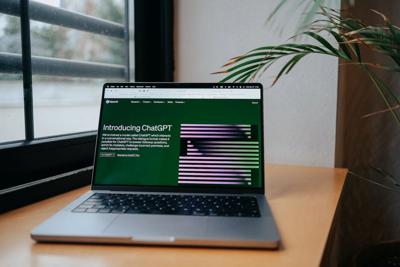
Fast forward 30 years, and once again, we find ourselves on the precipice of another revolution, this time driven by artificial intelligence (AI). At the leading edge of this movement is Chat GPT-4, the brainchild of OpenAI, an extraordinary feat of engineering that promises to revolutionize how we interact with the world around us.
This technology will undoubtedly change everything, but the question remains: What will we do with this newfound power? Will we learn from our past, or will we squander the potential of AI as we did with the internet? In the wise words of Spiderman, "With great power comes great responsibility." And we have a moral imperative to ensure we don't repeat our past mistakes.
For all its marvels, the internet has also become a breeding ground for our worst impulses. An unparalleled force in communication, the internet wields power that has birthed both marvels and menaces in equal measure. While brimming with potential, this colossal engine of connection has also unleashed a torrent of addiction, greed, and self-absorption. In time, we will reflect upon the initial three decades of the internet with the same astonishment and disbelief we reserve for the era of ubiquitous cigarette smoking and seatbelt-free car rides.
As we hurtle towards a future dominated by AI, we must ask ourselves: How can we wield this technology responsibly? How can we avoid the pitfalls that plagued the early days of the internet?
Imagine a world where AI-powered algorithms perpetuate and amplify our biases, deep-fakes blur the line between truth and fiction, and automation displaces millions of workers without a safety net. These are the possible dystopian consequences of AI if left unchecked.
But it doesn't have to be this way. If we approach AI with caution, wisdom, and humility, we can harness its power for the greater good. We can create a world where people work less but maintain the same level of comfort, where AI-driven medical breakthroughs eradicate disease, and where personalized education programs cater to the unique needs of each student.
I recently experimented with GPT-4, feeding it a year's worth of my journal entries and asking it to create a new entry as me. In just a matter of moments, the machine analyzed my 380-page journal and crafted an entry that captured my voice and writing style and provided a profound reflection on the human experience:
"The delicate balance between work and play, struggle and joy, is the essence of living fully. We can't always be chasing happiness – sometimes, we must endure the darkness to truly appreciate the light. By knowing ourselves, connecting with others, and embracing the present moment, maybe we can create a life worth living. Life is a game, a dance, a cosmic symphony—and we're all just trying to find our rhythm."
I was floored. In the hands of a responsible human, AI can be a partner in our creative endeavors, a collaborator that helps us explore the depths of our own consciousness and the breadth of the human experience.
As we stand at the crossroads of history, we should embrace the potential of AI while remaining ever-vigilant of its risks. I hope we learn from the lost promise of the internet, and forge a future where AI serves as an instrument of progress, not a harbinger of doom.
I'm optimistic we can remember the excitement and uncertainty accompanying the birth of the internet and approach it with the same sense of wonder. This same spirit of curiosity and exploration should guide us as we navigate the uncharted waters of AI, seeking out new horizons and untold possibilities. If we're smart about this, the AI revolution may just be able to usher in an era of unprecedented prosperity, equality, and harmony for all.
As the curtain rises on the age of AI, let us be guided by the lessons of the past, the limitless potential of our shared humanity, and the enduring truth that we are all, in our own way, dancing to the same cosmic rhythm.




(0) comments
Welcome to the discussion.
Log In
Keep it Clean. Please avoid obscene, vulgar, lewd, racist or sexually-oriented language.
PLEASE TURN OFF YOUR CAPS LOCK.
Don't Threaten. Threats of harming another person will not be tolerated.
Be Truthful. Don't knowingly lie about anyone or anything.
Be Nice. No racism, sexism or any sort of -ism that is degrading to another person.
Be Proactive. Use the 'Report' link on each comment to let us know of abusive posts.
Share with Us. We'd love to hear eyewitness accounts, the history behind an article.