
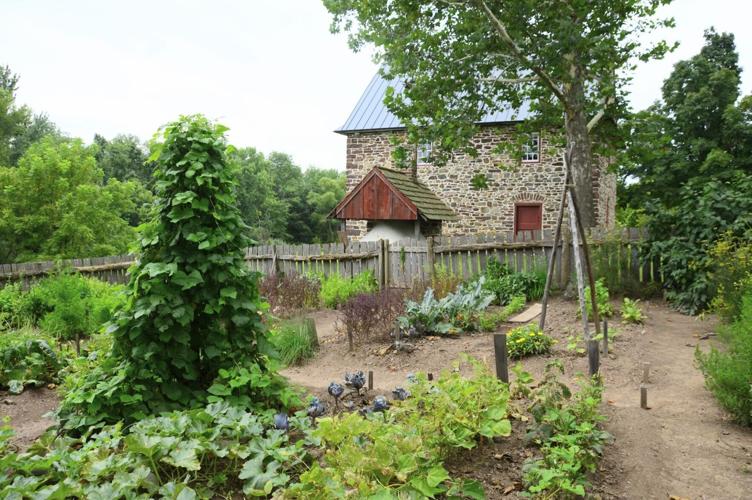
Say the name Henry Antes (1701-1755) to most people and you will probably get a blank look. Even among those who have some knowledge of colonial Pennsylvania history might be puzzled. Yet in his day Antes was a friend of Moravian founder Count von Zinzendorf and was among those who laid out the plans for Bethlehem.
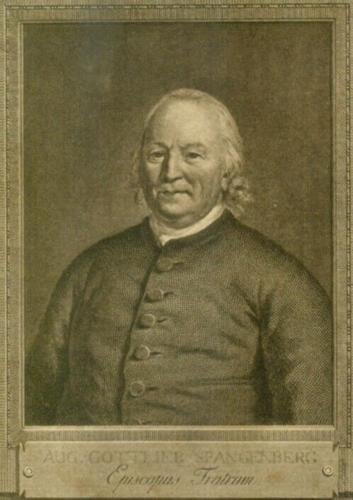
Antes, while not a Moravian himself, aided them in other ways. He enjoyed religious discussions with Bishop von Spangenberg, the leader Zinzendorf named to head Bethlehem.

According to 19th century Moravian bishop and historian Joseph Levering, Antes was a member of a group called the Associated Brethren of Skippack. Levering defines them as ‘‘earnest men of various creeds taking council together for the propagation of piety and fellowship regardless of sectarian lines.”
Looking at his background it is easy see why Antes, while seeing good in the ideals of all religions, was skeptical of the intolerance that many of them had for each other. Antes grew up in small village in what was known as the Electorate Palatinate, the home region of many Pennsylvania Germans in the larger Holy Roman Empire.
Split by the Protestant Reformation, it engulfed the empire in what history calls The Thirty Years War (1618-1648). Violent struggles pitted sect against sect and family against family. Protestants fought other Protestants over issues like infant baptism.
At its end with the Treaty of Westphalia, an enforced peace was imposed. If the Prince that ruled your district was a Lutheran, then his subjects were Lutherans; if they were Reformed, then the subjects were Reformed; and if Catholic, they were Catholic. No other sects were allowed.
Antes' family included minor nobility, Baron von Blum, and were on the losing side in the war. His lands and titles were taken. It was this ancestor, perhaps to cover his role in the war, who had their name changed from Blum to Antes, which he claimed was the Greek for Blum.
Several years later the new young king of France Louis XIV decided to make war against the bordering German states. Apparently to show he meant business Louis had his soldiers burn Antes’ hometown of Freinsheim to the ground. His father, Philip Frederick Antes, responded by becoming a carpenter and rebuilding his house. As he grew older young Heinrich worked beside his father and learned to be a millwright, which at that time meant was a person skilled in the construction of flour mills, sawmills, paper mills and fulling mills.
In 1720 19-year-old Henry Antes was one among many of the German immigrants who left the Old World behind for the New. Arriving in busy Philadelphia he made the acquaintance of papermaker William De Wees. They built on Moonshone Creek, between Germantown and Philadelphia, what was then the second paper mill in North America. Antes married De Wees' daughter and together they would have 11 children, 8 of whom survived into adulthood.
With a growing family Antes decided he wanted to settle outside of Philadelphia. So he moved to Upper Fredrick Township in Montgomery County. To support himself he built a grist mill and a lumber mill. Here he built in 1736 a large two-story home. There was nothing fancy about it, other than its size. It was here that significant meetings were held for the establishment of a united body to combine all of the German speaking churches, but nothing ever came of it in the end.
In 1745 Antes moved to Bethlehem to plan many of the buildings in the Moravian parts of the city that survive today. One modern expert who lived in Freinsheim in the 1960s noted in a 1990s interview that many of the original buildings bear a stronger resemblance to the town where Antes grew up than to anything in eastern parts of Germany. Others disagree.
At the same time he was working in Bethlehem, Antes offered the Moravians a piece of land near his home that became the Frederickstown School, which had one Black student and one Native American student, said to be the only school in the country to allow that at the time.
Despite his closeness things were not always close between the Moravians and Antes. In 1750 a dispute broke out between him and church leader John Nitschmannn over what one source called “adoption of titles and change in ecclesiastical doctrine.” By 1752 Antes could see that nothing was being solved by this and as he did not want to create more rancor he decided to return to his farm.
Only an appeal from his old friend Spangenberg got a reluctant Antes to agree to take up a commission in North Carolina for Moravian communities there. A combination of work and climate were too much for Antes who in 1755 returned to his home, dying there worn out at the age of 54.
The French and Indian War began the following year. Antes' family stayed at their family home until the Revolution. Antes’ son Frederick, an officer in Washington’s army, fearful that when the British heard that Washington had used the house as a headquarters, would seize it, and so he sold it for 500 pounds.

The property has had several owners over the years, among them as a Girl Scout property, Camp Laughing Water. Today it is listed as a National Historic Landmark and owned by a group known as the Goschenhoppen Historians who every summer host the Goschenhoppen Folk Festival there.




(0) comments
Welcome to the discussion.
Log In
Keep it Clean. Please avoid obscene, vulgar, lewd, racist or sexually-oriented language.
PLEASE TURN OFF YOUR CAPS LOCK.
Don't Threaten. Threats of harming another person will not be tolerated.
Be Truthful. Don't knowingly lie about anyone or anything.
Be Nice. No racism, sexism or any sort of -ism that is degrading to another person.
Be Proactive. Use the 'Report' link on each comment to let us know of abusive posts.
Share with Us. We'd love to hear eyewitness accounts, the history behind an article.