
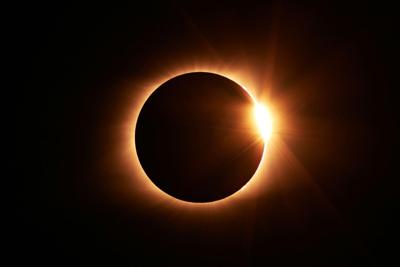

A solar eclipse will cross the U.S. on Monday, April 8, bringing stunning views to parts of the nation. While Chicago won’t experience a total eclipse, city dwellers are still in for a spectacular sight. Here’s everything to know about the eclipse and where to view it in Chicago!
The solar eclipse will begin around 11:00 a.m. Monday, first passing Mexico’s Pacific coast before making its way across the continental U.S. According to NASA, the eclipse will pass through the Southwest, Midwest and parts of New England. Areas including Indianapolis, southern Illinois, and upstate New York will be blanketed by a total eclipse.
Chicago lies just outside of the eclipse path, meaning that while the Windy City won’t experience the eclipse in totality, we’ll still see a near-total blackout. The eclipse will pass through the Chicago region between 12:51 p.m. and 3:22 p.m. The eclipse will reach peak coverage at 2:07 p.m. according to NASA.
Some of Chicago’s favorite museums are celebrating the eclipse with fun-filled viewing parties and events. Here’s where to view the eclipse in Chicago:
Adler Planetarium: Take in the beauty of the eclipse from the Adler Planetarium’s lakefront vantage point. Adler will host a free eclipse viewing party on April 8, featuring telescope viewing, free viewing glasses, fun photo ops, and other activities. Make a day of it and explore the planetarium’s exciting space exhibitions after the eclipse.
Museum of Science and Industry: View the spell-binding solar eclipse at Chicago’s Museum of Science and Industry (MSI) in Hyde Park. MSI’s eclipse free eclipse viewing event will offer guests special telescope viewing, a NASA livestream with a NASA ambassador, and other family-friendly activities.
City Cruises Chicago: Admire the eclipse while sailing down the Chicago River with City Cruises Chicago’s Eclipse Viewing Signature Lunch Cruise. Enjoy a chef-prepared lunch buffet, take in city views, and bask in an unobstructed view of the eclipse.
Visit NASA for more information on the solar eclipse.




(0) comments
Welcome to the discussion.
Log In
Keep it Clean. Please avoid obscene, vulgar, lewd, racist or sexually-oriented language.
PLEASE TURN OFF YOUR CAPS LOCK.
Don't Threaten. Threats of harming another person will not be tolerated.
Be Truthful. Don't knowingly lie about anyone or anything.
Be Nice. No racism, sexism or any sort of -ism that is degrading to another person.
Be Proactive. Use the 'Report' link on each comment to let us know of abusive posts.
Share with Us. We'd love to hear eyewitness accounts, the history behind an article.