
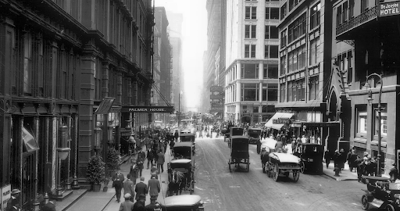

When walking through Chicago, one is constantly surrounded by a city brimming with history. Every cobblestone, every alley, every brick comes with a story. However, in a town this old, some places stand out above the rest as true pillars of the city’s culture and character. Institutions that have stood the test of time and have a few tales to tell for their troubles.
Recently, one of Chicago’s most beloved historical treasures, The Palmer House Hotel, was recognized by the Historic Hotels of America Association as a finalist in several categories for the group's annual awards. The iconic Windy City brand was selected as a nominee for three of its top prizes, including “Best Historic Hotel with over 400 Guestrooms,” "Best Historic Hotel Social Media,” and “Best Historian” for the hotel's archivist, Dinelia Smiles. Palmer House was the only Chicago hotel chosen as a finalist.
Subscribe to Chicago Star’s Weekly City Buzz Newsletter
While the Palmer House holds the prestigious distinction of being the longest continuously running hotel brand in the city, its journey has been anything but smooth. According to the hotel’s website, the original Palmer House, located a block away from the current location, was conceived by early Chicago entrepreneur Potter Palmer, who constructed it as a wedding present for his wife.
Palmer had made his fortune running one of Chicago’s first dry goods stores, standing out against competition by being the first retail shop to actively cater to female customers while also offering a “no questions asked” return policy, a novelty at the time. The department store operation would grow to one of the largest in the city, the website confirms, and eventually be handed down to one of Potter's proteges, Marshall Field, who subsequently turned the chain into the famous namesake brand.
The Palmer House says it officially opened its doors in 1871; however, just thirteen days after its grand opening, the Great Chicago Fire hit, burning down the entire building along with most of downtown. Undeterred, Palmer rebuilt the inn by 1875, complete with oversized rooms, luxury decor, and grand-style dining that quickly made it one of the most prestigious lodgings in the city. At its grand opening, it would become one of the first hotels to incorporate electric lighting and steam-powered lifts, an early version of an elevator. By 1880, the hotel would also be an early adopter of the telephone as one of the first hotels to install the invention in each room.
Over the next 50 years, the Palmer House would be an epicenter of who’s who and what's what in Chicago. The Palmer House notes famous guests included presidents such as James Garfield, Ulysses Grant, Grover Cleveland, William McKinley, along with cultural icons like Mark Twain and Oscar Wilde.
Read more on Chicago Star:
With so many movers and shakers of the era passing through, Palmer House became the location of many historical moments. According to the hotel, in 1893, ahead of the Chicago World’s Fair, the hotel became the birthplace of the brownie when Palmer's wife Bertha tasked the kitchen staff with creating a confection that was both novel and easy to eat for visitors of the exhibition. Brownies continue to be a mainstay of the Palmer House menu, which still uses roughly the same original recipe.
A few years later, in 1895, a meeting at the Palmer House held by collegiate officials from universities across the Midwest led to the creation of the Big Ten Conference.
By the early 1900’s, Chicago's rapid population growth and economic boom had led demand to outpace the hotel's supply. Thus, in the 1920’s the Palmer estate built a brand new hotel on the same site, which remains the building standing today. At its debut, the hotel featured 2,268 guestrooms, which briefly held the record for the largest hotel in the world.
The new grand lodge continued to be one of the pinnacles of Chicago society. In the 1930’s the hotel's famous Empire Dining Room was converted into an entertainment supper club, hosting famous acts such as Frank Sinatra, Elza Fitzgerald, Louis Armstrong, and Liberace. In 1945, the famed hotel magnate Conrad Hilton purchased the property, adding it to his company's envious international portfolio.
Per a press release from Hilton, the Palmer House more recently completed a $170 million upgrade, finished during the COVID-19 isolation period, ensuring it maintains its position at the forefront of Chicago accommodations into the future.
The Historic Hotels of America will announce the winners of its annual awards on Thursday, Oct. 15. While the Palmer House will remain hopeful it can bring home some prestigious hardware, its legacy extends far beyond trophies and accolades. In the heart of the city, it remains one of the town's best ambassadors, a brick-and-mortar canvas adorned with a century and a half of Chicago history.




(0) comments
Welcome to the discussion.
Log In
Keep it Clean. Please avoid obscene, vulgar, lewd, racist or sexually-oriented language.
PLEASE TURN OFF YOUR CAPS LOCK.
Don't Threaten. Threats of harming another person will not be tolerated.
Be Truthful. Don't knowingly lie about anyone or anything.
Be Nice. No racism, sexism or any sort of -ism that is degrading to another person.
Be Proactive. Use the 'Report' link on each comment to let us know of abusive posts.
Share with Us. We'd love to hear eyewitness accounts, the history behind an article.