


Most know the story of the Great Chicago Fire of 1871, or at least the famous tale of Mrs. O'Leary and her misbehaving cow that may or may not have ended up setting the city ablaze. But what most might not know is that there are actually a few remnants from that fateful night that still stand today, a testament to the fire's immense power and the city's incredible persistence.
Chicago Water Tower and Pumping Station
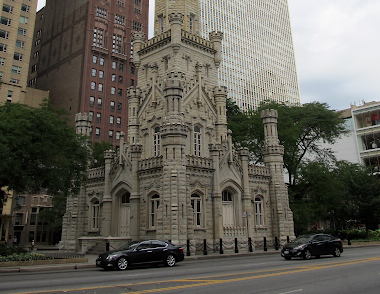
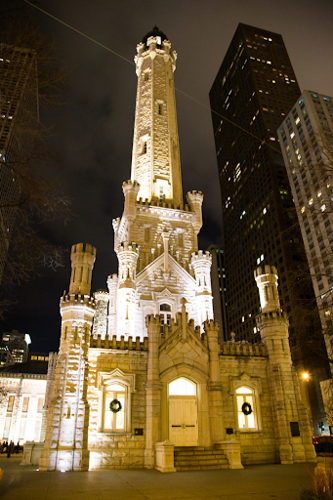
Maybe the most well-known survivor of the Great Fire, the water tower, then known as the Chicago Water Works, and its associated pumping station became both one of the key characters of the Great Fire saga.

Photo by: Encyclopedia Britannica
Per WTTW, during the night of the disaster, the water works famously failed after its roof collapsed, destroying the pumps. However, when the flames subsided the next day, the limestone walls of the building stood tall amongst the ashes, becoming a symbol of resilience for the recovering city.
Richard Bellinger Cottage
Located at 2121 N. Hudson Ave., the Bellinger Cottage was owned by Chicago police officer Richard Bellinger and was one of the only residential abodes situated within the burn radius that managed to survive. As reported in the Chicago Tribune, the story goes that Bellinger saved his property by wisely ripping up the wooden sidewalks and porch surrounding his home as the danger spread, creating a fire break that kept the inferno from engulfing the house.
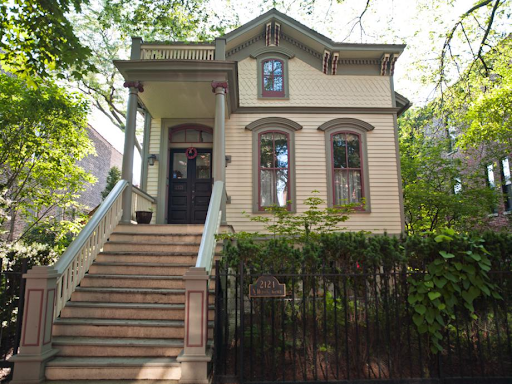
Photo by: The Chicago History Museum
According to legend, Bellinger took in over twenty-one people as the fire raged, repelling further damage by coating the outside of the house in wet rugs and even using a barrel of cider to douse flames once the family's well ran dry. The property still sits in its same location, and while it was largely renovated over the years, some original elements still remain.
Subscribe to Chicago Star’s Weekly City Buzz Newsletter
Old St. Patrick’s Church
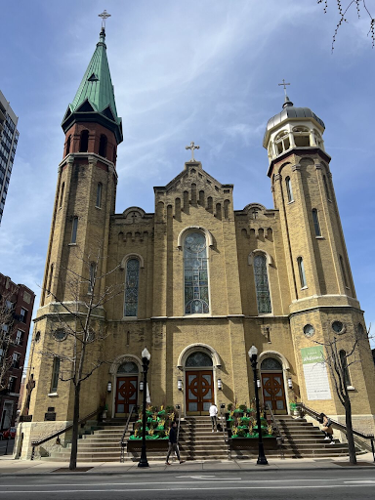
Constructed in the 1850s, Old St. Patrick’s Church, located at 700 W Adams St., has the distinction of being the oldest public structure in the city. Described as “the cornerstone of Irish culture” in Chicago, Old St. Pat's miraculous survival was thanks to its sturdy Romanesque stone construction, which allowed its main building to fend off the blaze.

Photo by: The Chicago History Museum
The church still operates today as one of the premier downtown places of worship, hosting masses six days a week as well as weddings and other community events.
The Couch Crypt
In the 1800’s, much of what is now Lincoln Park used to be the city's primary cemetery. When the fire came in 1871, it destroyed most of the area, but one mausoleum managed to survive thanks to its imposing stone construction. According to Smithsonian Magazine, the tomb was constructed by, and remains the final resting place of, early Chicago real estate mogul Ira Couch and still sits today in its original location near the Chicago History Museum on the southwest edge of the grounds.
Couch started one of the city’s first hotels in the 1830’s and was believed to be the third richest person in Chicago at the time of his death. Experts suggest that an estimated 12,000 bodies abandoned after the disaster still remain in unmarked graves beneath the park today.
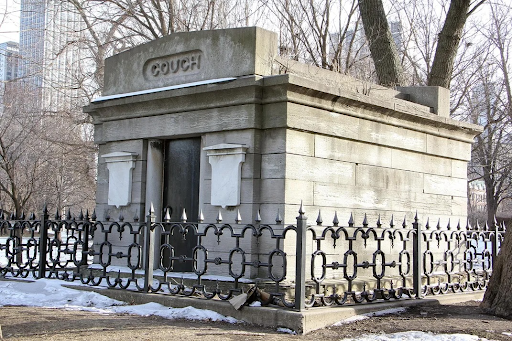
Photo by: The Chicago Park District
Read more on Chicago Star:
Joffrey Ballet opens season with Chicago premiere of 'Liliom'
Brookfield Zoo hits the pangolin lottery again with second birth
St. James Cathedral
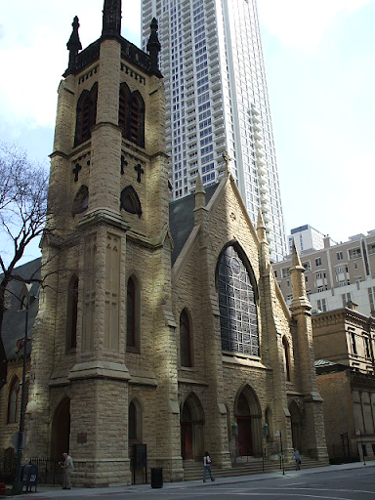
The St. James Cathedral, located on the corner of Wabash and Huron, was another holy institution that managed to survive the deadly disaster, according to Smithsonian Magazine. On the night of the fire, the Church’s bell rang out to warn the citizens of the city.

Photo by: Wikimedia Commons
In the morning, all that was left standing was the stone bell towers and walls. Even today, one can look up to the top of the tower and see black char marks left behind.
The Chicago History Museum’s Fused Metal Blob
Maybe the most unique survivor from that fateful night is a landmark so unassuming many would think it a boulder and pass by without a second thought. Located behind the Chicago History Museum sits a large metal blob, a relic that was found while constructing the Masonic Temple building in 1892 and turned over to the city's government, according to CBS News.
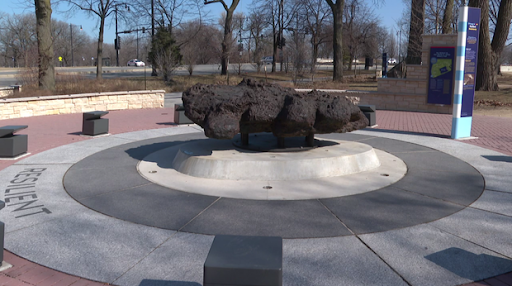
Photo by: CBS News
The origin of the blob is believed to be from the Hall & Kimbark Ironware House, which used to occupy the site of the Masonic Temple. As the fire raged, it consumed the store, creating an inferno that fused the business’s metal inventory into a giant mass that has stood the test of time.




(0) comments
Welcome to the discussion.
Log In
Keep it Clean. Please avoid obscene, vulgar, lewd, racist or sexually-oriented language.
PLEASE TURN OFF YOUR CAPS LOCK.
Don't Threaten. Threats of harming another person will not be tolerated.
Be Truthful. Don't knowingly lie about anyone or anything.
Be Nice. No racism, sexism or any sort of -ism that is degrading to another person.
Be Proactive. Use the 'Report' link on each comment to let us know of abusive posts.
Share with Us. We'd love to hear eyewitness accounts, the history behind an article.