
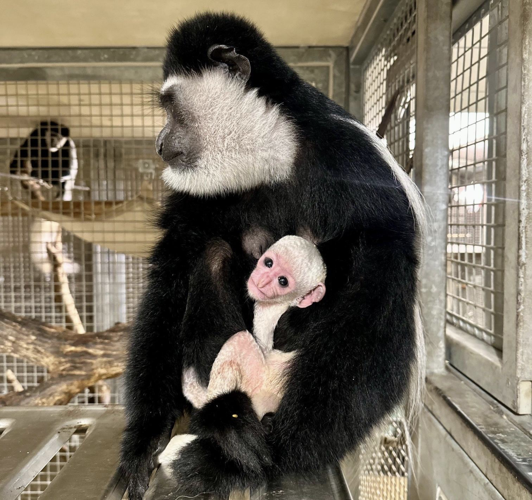

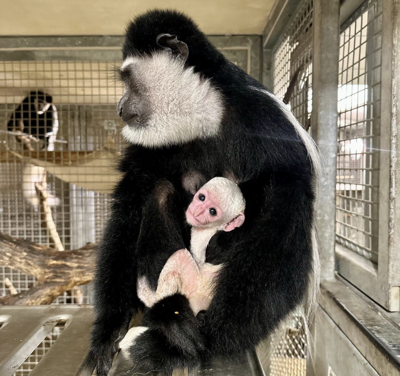
A male black-and-white colobus monkey was born at Lincoln Park Zoo, giving visitors a chance to watch the newest member of a closely connected troop grow up. According to the zoo’s announcement, the infant was born in the early morning hours of Sept. 24 to Nola, a 7-year-old first-time mother, and Oku, an 11-year-old male.
Nola and her newborn are doing well and remain under the care of the zoo’s animal care and veterinary teams. The rest of the troop has also shown interest in the arrival, including the baby’s maternal grandmother, 22-year-old Kutaka, along with Nola’s younger siblings, Kean and Zinga.
Subscribe to Chicago Star’s Weekly City Buzz Newsletter
A new arrival for the colobus troop
The family will remain together at the Helen Brach Primate House. Nola and the infant will appear intermittently, the zoo confirmed, and the baby should be easy to spot when he is visible. His bright white coat and pink face contrast sharply with the mostly black coloring of adult colobus monkeys.
That early coloring also serves a practical purpose. According to Lincoln Park Zoo, it helps parents watch their young and quickly identify them among the other members of the troop. The infant’s coat will gradually change, and he is expected to reach adult coloration at about six months old.
“Nola is already proving to be a great mom, and we’re excited to see how the other females in the troop develop their parenting abilities with the baby, something common for colobus monkeys,” said Curator Dani Fogarty in the zoo’s press release.
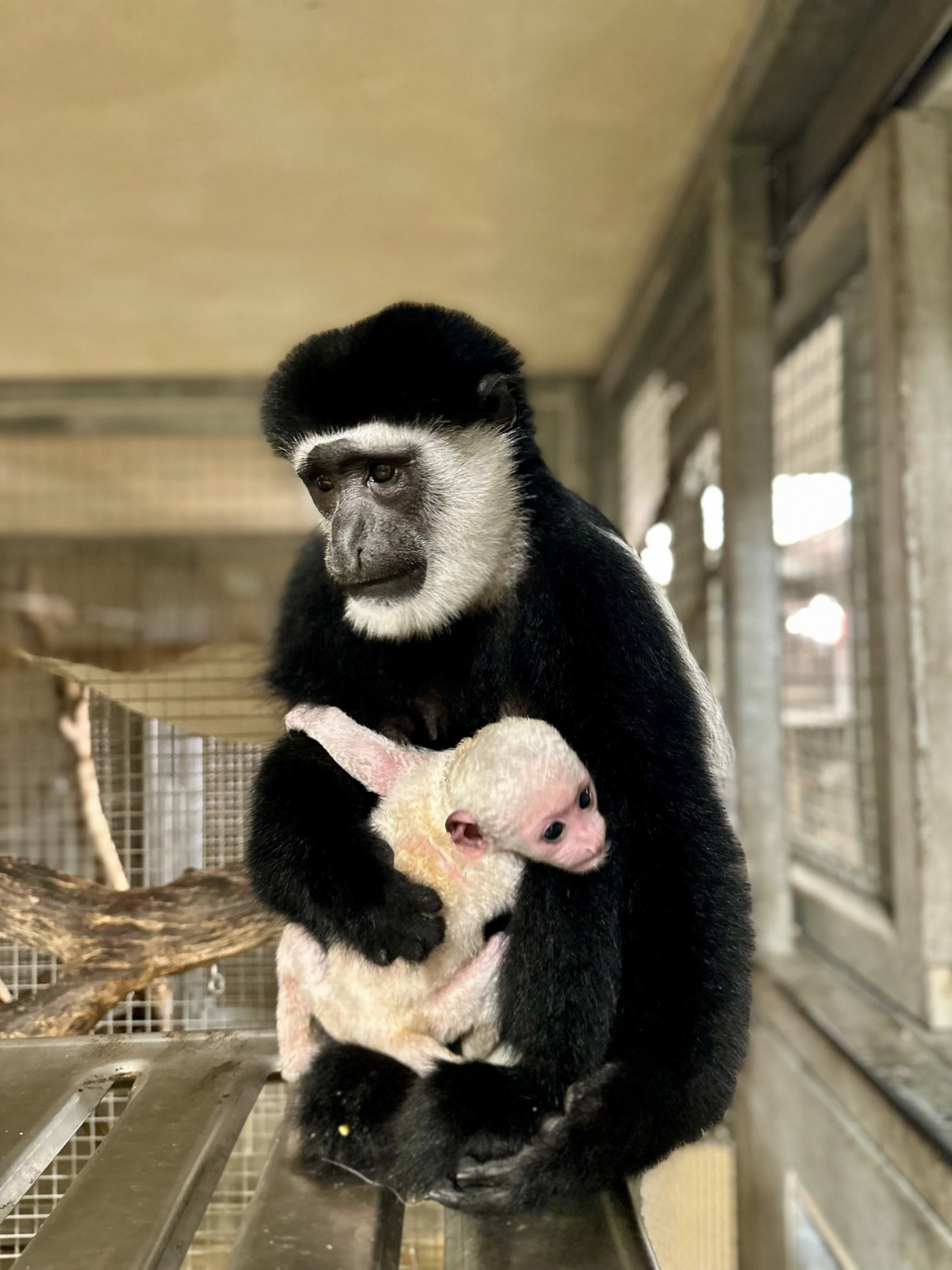
Colobus monkey baby with mother Nola | Photo by Lincoln Park Zoo
Read more on Chicago Star
Love is in the air! Lincoln Park Zoo’s new Bolivian gray titi monkey goes bananas for mate
Skulls, spices, and spirits: Celebrate Dia de los Muertos (Day of the Dead) Chicago-style
Lincoln Park Zoo welcomes Dolly and Dean, new swans named for Dolly Parton & Carl Dean
Chicago’s top fall races return: Half Marathon, Bank of America Marathon & Turkey Trot
Birth supports species conservation
The birth followed a recommendation from the Colobus Guereza Species Survival Plan, a cooperative population-management program involving accredited Association of Zoos and Aquariums institutions. According to the zoo, the program supports the health and stability of the species in human care.
Black-and-white colobus monkeys are native to forests in central Africa, the zoo said. They spend much of their lives in trees and travel in cohesive family groups that can include as many as 15 animals.
The species faces pressure in the wild from deforestation, habitat loss, and illegal hunting. The monkeys are considered to be at lower risk of extinction, but conservation programs help maintain healthy populations.
People can support the zoo’s work by adopting a colobus monkey or making a donation through Lincoln Park Zoo.




(0) comments
Welcome to the discussion.
Log In
Keep it Clean. Please avoid obscene, vulgar, lewd, racist or sexually-oriented language.
PLEASE TURN OFF YOUR CAPS LOCK.
Don't Threaten. Threats of harming another person will not be tolerated.
Be Truthful. Don't knowingly lie about anyone or anything.
Be Nice. No racism, sexism or any sort of -ism that is degrading to another person.
Be Proactive. Use the 'Report' link on each comment to let us know of abusive posts.
Share with Us. We'd love to hear eyewitness accounts, the history behind an article.