

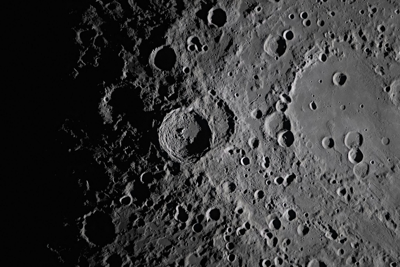

NASA’s Lunar Reconnaissance Orbiter has found a giant new Moon crater that scientists say formed in a rare impact sometime between April 11 and May 22, 2024, NASA confirmed. According to the website, the crater, named McGetchin, is about 728 feet wide and 141 feet deep, making it the largest newly formed impact crater ever identified in the solar system.
The discovery came from a careful review of before-and-after images from the orbiter, according to NASA and the researchers behind the studies published Wednesday, Sept. 16, in “Science Advances.” NASA scientist Robert Wagner said in its announcement, “I just stopped, dropped everything, and started looking into what that spot was,” after noticing a bright area ringed by a dark halo on a Moon map.
Subscribe to Chicago Star’s Weekly City Buzz Newsletter
Why scientists say it matters
Researchers said the impact likely came from an asteroid or comet fragment the size of a three- to six-story building, NASA confirmed. They estimate an event this large happens on the Moon only about once every century, or even less often, which makes McGetchin a rare chance to study a fresh crater before later impacts and space weathering change it.
Tyler Powell, lead author of one of the studies, told Space.com, “McGetchin crater is exceptional because it is the largest newly formed impact crater that has been identified to date,” and added that scientists are “extremely lucky” it formed during the Lunar Reconnaissance Orbiter mission.
Read more on Chicago Star
“The Princess Bride” Chicago premiere set for 2027 at the James T. Nederlander Theatre
Pop sensation & “Come to Mama” singer Lady Gaga becomes a mom, reveals baby name
Oprah Winfrey returns to the stage to host live Las Vegas Sphere show in 2027
Pass the pasta! Tortello searches for Chicago’s best Italian nonnas in recipe contest
Chicago Bears rookie Malik Muhammad impresses on and off the field at Brookfield Zoo
Hello autumn: The ultimate guide to fall festivals, pumpkin patches & corn mazes in Chicago
How the impact changed the surface
The studies found that the blast spread material far beyond the crater itself. One team saw an ejecta blanket around the crater, Space.com confirmed, while another found a broad thermal anomaly, including a cold spot about 4.3 miles wide that was 14 to 16 degrees Fahrenheit colder than nearby ground at lunar night.
Scientists said that happened because the impact loosened and decompacted the Moon’s upper soil, making it hold heat less well. They said the crater may also help future lunar exploration, especially because it sits near the boundary between the Moon’s dark mare and brighter highlands.




(0) comments
Welcome to the discussion.
Log In
Keep it Clean. Please avoid obscene, vulgar, lewd, racist or sexually-oriented language.
PLEASE TURN OFF YOUR CAPS LOCK.
Don't Threaten. Threats of harming another person will not be tolerated.
Be Truthful. Don't knowingly lie about anyone or anything.
Be Nice. No racism, sexism or any sort of -ism that is degrading to another person.
Be Proactive. Use the 'Report' link on each comment to let us know of abusive posts.
Share with Us. We'd love to hear eyewitness accounts, the history behind an article.