
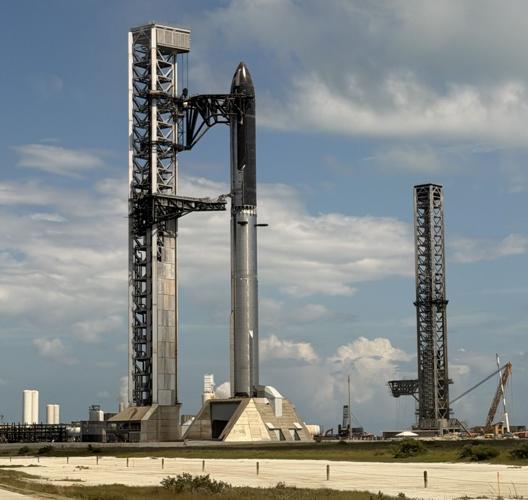

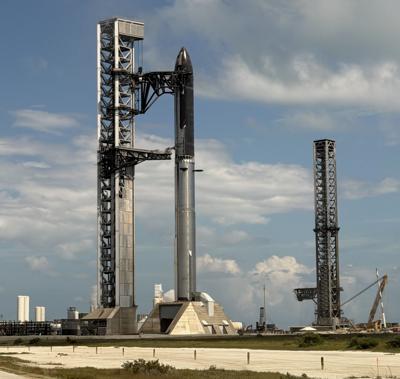
Elon Musk’s SpaceX sent its Starship into orbit for the first time Monday, a milestone flight from Starbase in South Texas, the company announced on X. According to NPR, the flight carried 26 upgraded Starlink satellites and marked a major step for the company’s rocket program.
The mission began after a morning liftoff from the company’s launch site near Boca Chica Beach. SpaceX first planned a nearly 10-hour test, but mission managers later shortened the flight to about three hours after launch, NPR reported.
Subscribe to Chicago Star’s Weekly City Buzz Newsletter
First orbital test
The Super Heavy booster fired its 33 engines and lifted the 171-foot-tall rocket into space. About two and half minutes after launch, Starship separated from the booster, and one of Starship’s six engines failed during ascent, NPR confirmed. SpaceX reviewed the vehicle’s status and decided it was safe to continue to orbit.
The booster was meant to simulate a splashdown offshore in the Gulf of America, while Starship was set to splash down in the Pacific Ocean north of Hawaii. According to NPR’s report, the flight was designed to test hardware, software and the heat shield that SpaceX needs for future reuse.
Read more on Chicago Star
Chicago Star Founder Elaine Hyde makes history on Blue Origin space flight
NASA finds largest new Moon crater ever seen after impact by an asteroid the size of a building
The NASA Standard Initiator that powered Artemis II is named "Coolest Thing Made in Illinois"
And we have liftoff! Elon Musk becomes world’s first trillionaire from SpaceX's record IPO
Houston, we’re coming home: NASA astronauts journey back to Earth on SpaceX capsule
Whose gulf is it? Gulf of America replaces Gulf of Mexico on Google Maps in the US

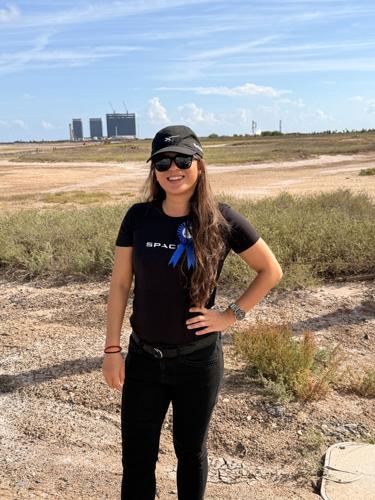
Chicago Star Media Publisher Elaine Hyde in Starbase, TX | Photo by Elaine Hyde
Why the flight matters
SpaceX said the mission deployed 26 Starlink V3 satellites, the first production-quality versions of the company’s next-generation broadband system to ride Starship into orbit, per Bloomberg. The company has said Starship is the only spacecraft able to launch the larger V3 satellites, which are expected to expand Starlink’s capacity.
According to Bloomberg’s report, SpaceX Chief Financial Officer Bret Johnsen has called the flight a “revenue-generating flight,” and Elon Musk said the V3 satellite is “more than 10 times the capability of the V2 satellite, and we’ll be launching 10 times as many.”
Starship is also central to SpaceX’s wider plans, including orbital refueling, full reusability and future missions beyond Earth. NASA also relies on Starship for planned Artemis lunar missions.




(0) comments
Welcome to the discussion.
Log In
Keep it Clean. Please avoid obscene, vulgar, lewd, racist or sexually-oriented language.
PLEASE TURN OFF YOUR CAPS LOCK.
Don't Threaten. Threats of harming another person will not be tolerated.
Be Truthful. Don't knowingly lie about anyone or anything.
Be Nice. No racism, sexism or any sort of -ism that is degrading to another person.
Be Proactive. Use the 'Report' link on each comment to let us know of abusive posts.
Share with Us. We'd love to hear eyewitness accounts, the history behind an article.