

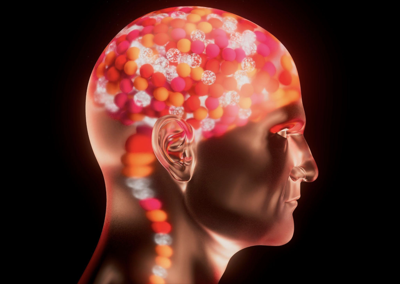

Researchers at UC San Francisco have identified a single protein driving cognitive decline in aging brains, according to Science Daily, and their findings suggest the damage may be reversible. The protein, called FTL1, accumulates in the hippocampus—the brain region responsible for learning and memory—as people grow older, the study revealed.
Scientists compared young and old mice and discovered that older brains contained significantly higher levels of FTL1. These older mice showed fewer connections between brain cells and performed worse on memory tests, Science Daily reported.
According to Inc., when researchers artificially increased FTL1 in young mice, their brains began functioning like those of much older animals.
Reversing the damage: A breakthrough discovery
The most striking finding came when researchers reduced FTL1 levels in aging mice. The treated mice regained lost brain connections and improved significantly on memory tests, Inc. reported.
"It is truly a reversal of impairments," said Saul Villeda, PhD, senior author of the study published in Nature Aging, according to Science Daily. "It's much more than merely delaying or preventing symptoms."
Read more on Chicago Star
Cocktails with a classic twist: Kitty's Cosmopolitan Club debuts in River North
Stars align at Augusta: 2026 Masters Tournament golf picks and predictions
Lyric Opera bolsters board with top talents, including Smashing Pumpkin’s Billy Corgan
Will Zendaya pull a Houdini? Actress drops slew of 2026 releases, including “The Drama”
American Writers Festival 2026 expands to two days with free events across Chicago
The research revealed how FTL1 causes its damage. High levels of the protein slow energy production within brain cells, weakening the connections between neurons, Inc. noted. Lab experiments showed that nerve cells engineered to produce excessive FTL1 developed simplified structures instead of the complex, Science Daily confirmed, branching networks found in healthy brains.
According to Science Daily, when researchers treated cells with a compound that boosts metabolism, the negative effects of FTL1 were prevented entirely. This discovery opens new possibilities for developing treatments targeting age-related memory loss.
While these results offer hope for treating brain aging, researchers emphasize that significant work remains before any treatment reaches patients. The findings, however, represent a major step forward in understanding and potentially reversing cognitive decline associated with aging.




(0) comments
Welcome to the discussion.
Log In
Keep it Clean. Please avoid obscene, vulgar, lewd, racist or sexually-oriented language.
PLEASE TURN OFF YOUR CAPS LOCK.
Don't Threaten. Threats of harming another person will not be tolerated.
Be Truthful. Don't knowingly lie about anyone or anything.
Be Nice. No racism, sexism or any sort of -ism that is degrading to another person.
Be Proactive. Use the 'Report' link on each comment to let us know of abusive posts.
Share with Us. We'd love to hear eyewitness accounts, the history behind an article.