

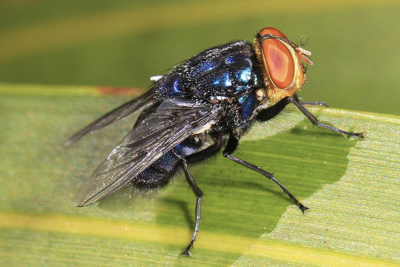

Federal agriculture officials confirmed a New World screwworm case in a 3-week-old calf in Zavala County, Texas, according to the U.S. Department of Agriculture’s Animal and Plant Health Inspection Service, per CNBC. The larvae were found in the calf’s umbilical area, and officials said there have been no other detections so far.
The USDA said the parasite’s larvae “burrow into the flesh of living animals, causing serious damage to livestock and economic losses.” The agency confirmed it is working with Texas officials to contain and eradicate the pest.
Subscribe to Chicago Star’s Weekly City Buzz Newsletter
Containment steps in Texas
Officials established a 20-kilometer, or 12-mile, infested zone around the detection and are enforcing quarantines, movement controls and surveillance, according to the USDA. Dudley Hoskins, the USDA undersecretary for marketing and regulatory programs, said, “Protecting our livestock industry is a national security issue of the utmost importance, and USDA is wasting no time in taking action,” according to the CNBC report.
The USDA also added, “USDA invested heavily in the tools needed to eliminate NWS ever since cases started increasing in Central America and Mexico. The United States has defeated this pest before, and we will do it again.”
Read more on Chicago Star
Keep those eyes open, stargazers: Northern lights forecast upgraded for Thursday, Friday
French-Iranian author Marjane Satrapi, of the memoir-turned-film “Persepolis,” dies at 56
Knicks steal game 1 from Spurs, 105-95—Jalen Brunson on fire after halftime sneaker change
Aryna Sabalenka loses bid for French Open title to Diana Shnaider
Why officials are concerned
New World screwworm has been spreading in parts of Central America and Mexico, where USDA says it is dispersing 100 million sterile insects each week in an effort to suppress the pest and keep it from moving north. The agency said the sterile insect release area is adjusted as needed based on science and modeling.
In December, the Food and Drug Administration granted conditional approval to Exzolt Cattle-CA1, a topical solution used to prevent and treat New World screwworm infestations, according to the USDA’s current-status page and CNBC’s report. The product is made by Merck Animal Health, a division of Merck & Co.
Merck shares rose more than 3.5% in early trading Thursday, per CNBC.




(0) comments
Welcome to the discussion.
Log In
Keep it Clean. Please avoid obscene, vulgar, lewd, racist or sexually-oriented language.
PLEASE TURN OFF YOUR CAPS LOCK.
Don't Threaten. Threats of harming another person will not be tolerated.
Be Truthful. Don't knowingly lie about anyone or anything.
Be Nice. No racism, sexism or any sort of -ism that is degrading to another person.
Be Proactive. Use the 'Report' link on each comment to let us know of abusive posts.
Share with Us. We'd love to hear eyewitness accounts, the history behind an article.