
“Colleges” — that three-syllable word high schoolers recognize as the next chapter in their lives.
It’s also a word associated with an increasingly grueling application process.
In 2026, high school students start preparing as early as 10th grade for their SATs/ACTs, all while taking on advanced coursework to prove their worth—like APs or IB tracks. Yet paradoxically, it’s no longer just academics keeping students busy; extracurriculars are where high-achieving students must truly differentiate themselves from their peers. Indeed, the acceptance rates at top universities across the country have plummeted precipitously over the past decades.
In 2000, Harvard’s acceptance rate was 10.9%, as reported by the Harvard Crimson; in 2025, this past admissions cycle saw this rate reach 4.18%. As a result, already high-achieving students become even more competitive with their fellow applicants, but also with their peers and friends. At the most rigorous high schools across the U.S., students have learned to “gatekeep”—meaning to withhold tips on whatever might give them an edge in the admissions process.

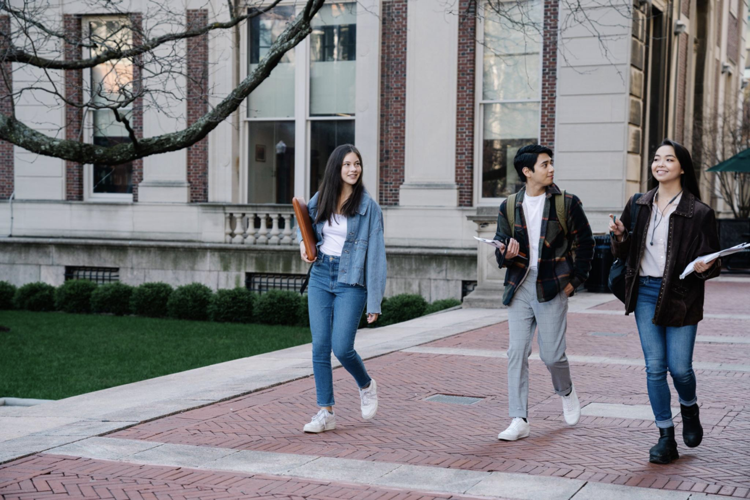
Photo of university students by George Pak
Moreover, while these obstacles are found in the preparation for college admissions, the actual college admissions process is even more daunting. To attend a top school in the U.S., it’s already assumed a student vying for one of these spots already has top 1% academics and has secured extracurriculars that would sound impressive even for a college student.
What’s more, these elite students must dedicate hours writing essays...lots and lots of essays. In this respect, what makes the 2026 landscape different from previous years is the use of artificial intelligence in essays. Students who might have had minimal exposure to AI tools during school are now tasked with having a powerful AI tool at their disposal to help edit their creative work. Yet, they must also exercise tremendous discipline and self-awareness so as to keep “their true authentic voice” in whatever they write. “Does this sound like AI?” has become a frequent concern for students—even for those fortunate enough to rely on their own words and style of writing.
Subscribe to Chicago Star’s Weekly City Buzz Newsletter
Furthermore, while a student may spend dozens of hours perfecting their essays thanks to AI tools, all from the comfort of their home, face-to-face interviews have become a lost art. This is perhaps the element of the college application process I feel strongest about. For an Ivy League institution, interviews are fundamentally the only way to really know an applicant, especially in 2026. How a student will be on campus is, after all, the purported purpose of the various essays students are subjected to every year. While many of these top institutions have foregone alumni-student interviews in the recent past, some institutions have kept this door open. For example, Harvard, Stanford, Yale, and MIT still offer students optional interviews. You heard that right: optional.

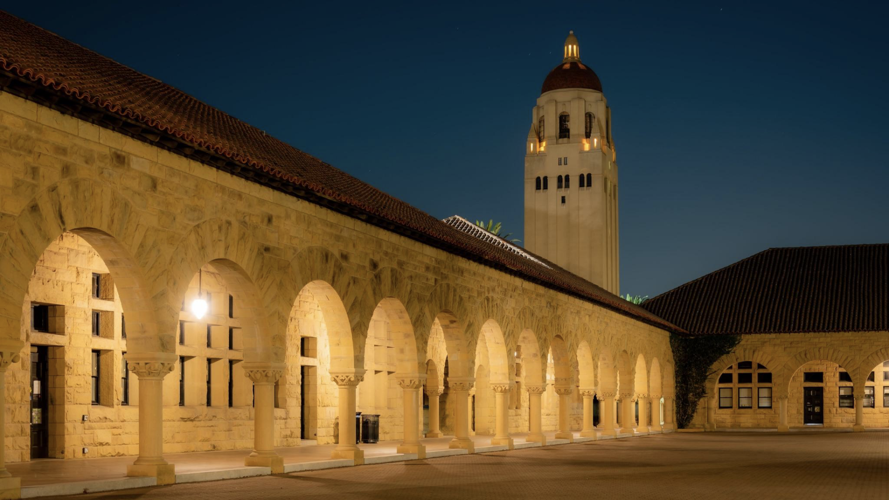
Photo of Stanford University at night by Zetong Li
What’s more, in the years following Covid-19, more and more students have been opting for virtual interviews since these are lower pressure and more convenient—a subtle nod to all the social anxiety stereotypes about Gen Z in 2026. It was just last year that my Stanford interviewer told me that while I was her last student she’d interview for the season, I was the only student who’d gone for an in-person interview.
Read more on Chicago Star:
- Chicago's crypto market now trades around the clock
- Northeastern Illinois University becomes Chicago’s first public school to offer AI degree
- RPM Raceway plans 90,000 sqft go-kart venue, longest in the Midwest
- Chicago is booming with tourism and office sales surge
- Musk expands AI empire with landmark Cursor acquisition
The relationship between students and their dream colleges has definitely complexified with time. Social media feeds for teenagers have become inundated with college reaction videos (usually disproportionately positive) and a bevy of advice (some good, some baseless). Students resort to community feeds like Reddit as well as experiences from older students to balance out the randomness of TikTok and YouTube shorts. Although many students try and succeed at cutting through all the noise, the admissions process still weighs heavily on their mental health.
According to a survey conducted by the Art & Science Group in 2025, 89% of high school seniors reported moderate to high anxiety levels around applying to colleges. In the face of such an uphill battle filled with uncertainty for millions of students, the most competitive high schoolers have learned to adapt—but at what cost?
Ultimately, the admissions landscape isn’t getting less competitive. But schools can clarify guidelines for AI use so students don’t have to resort to random online advice. At the same time, I’d encourage high school seniors to invest just a little more time to attend in-person interviews—they’re arguably the most authentic part of the application cycle.




(0) comments
Welcome to the discussion.
Log In
Keep it Clean. Please avoid obscene, vulgar, lewd, racist or sexually-oriented language.
PLEASE TURN OFF YOUR CAPS LOCK.
Don't Threaten. Threats of harming another person will not be tolerated.
Be Truthful. Don't knowingly lie about anyone or anything.
Be Nice. No racism, sexism or any sort of -ism that is degrading to another person.
Be Proactive. Use the 'Report' link on each comment to let us know of abusive posts.
Share with Us. We'd love to hear eyewitness accounts, the history behind an article.