

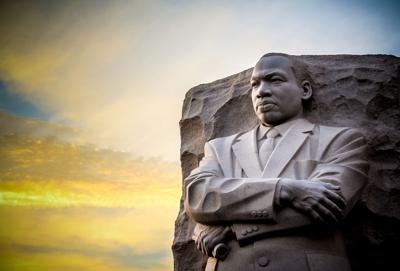

Chicago holds a profound chapter in the life and work of Dr. Martin Luther King Jr., one that goes beyond the familiar marches in the South and into the heart of the North, where the struggle for civil rights took on new urgency and resistance.
In 1966, Dr. King didn’t just visit Chicago, he moved here. With his family, King took up residence in the North Lawndale neighborhood on Chicago’s West Side, embedding himself in the everyday fight against systemic racism. His focus expanded beyond voting rights and segregation in the South to include fair housing, employment and equitable education in the North.
King’s presence in Chicago was part of the Chicago Freedom Movement, a coalition of civil rights activists, religious leaders, and community organizers determined to confront discriminatory housing practices and segregation that left Black families confined to overcrowded, under-resourced neighborhoods.
Read more on Chicago Star:
- Ten things I would rather be doing than ice fishing
- Kickstart your 2026 fitness journey at one of these top gyms in Chicago
- Safety & affordability at the heart of Chicago as city releases its annual year-in -review
- Flower power in full bloom at the Botanic Garden’s Orchid Show
- Steakhouse royalty: Morton’s 'The Barn' lands in Highland Park
- Golden Globes 2026 and why Kylie Jenner deserved her own award
One of the most infamous moments from this period unfolded in Marquette Park, where King led a march with approximately 700 supporters to protest housing segregation. The marchers were met by violent crowds, stones, bottles, and explicit hatred, forcing the march to dissolve and leaving King to reflect on the deep-rooted resistance in northern cities.
While history often remembers King for his speeches and iconic moments, recent cultural work in Chicago aims to highlight his everyday lived experience in the city. North Lawndale native Willie Round has written a new play titled Lawndale King that dramatizes Dr. King’s time living and working among Chicagoans. The play brings to life King’s efforts to advocate for fair housing, jobs, and quality education while also showing the personal side of the man—his family life, small habits, and humanity.
Presented by Collaboraction Theatre and staged at the Chicago History Museum on Martin Luther King Jr. Day, Lawndale King uses historical figures and composite characters from the community to explore the tension, hope, and resilience that defined King’s Chicago mission. A post-show discussion with director Pemon Rami adds depth to the narrative, bridging past and present. (Mon., Jan. 19, 10 am)
This production not only educates audiences about Chicago’s pivotal role in the civil rights movement but also reveals a chapter often absent from textbooks—the year Dr. King lived in an apartment on South Hamlin Avenue, fighting for justice from inside the community he served.
Chicago continues to honor King’s legacy in both memorial and celebration. The Martin Luther King Jr. Living Memorial in Marquette Park commemorates the historic march and serves as a reminder of the long road toward justice—a journey King himself described as “the first step on a 1,000-mile journey.”
Each Martin Luther King Jr. Day, the city offers a range of meaningful ways to reflect and act: museum programs, concerts, volunteer events, discussions, and performances—like those at the Chicago History Museum—that connect Chicagoans of all ages with King’s message of justice, nonviolence, and community building.
Dr. King’s Chicago story is not just a historical footnote—it is a living, breathing part of the city’s identity. It reflects the ongoing struggles for equity and dignity in housing, education, employment, and community life. Through art, memorials, and civic engagement, Chicago keeps King’s mission alive—not as a moment frozen in time but as a call to thoughtful action today.
Whether through theatrical retellings or community service, the legacy of King’s time in Chicago invites us not only to remember but to carry forward the courage and hope he brought to this city.
Sources:




(0) comments
Welcome to the discussion.
Log In
Keep it Clean. Please avoid obscene, vulgar, lewd, racist or sexually-oriented language.
PLEASE TURN OFF YOUR CAPS LOCK.
Don't Threaten. Threats of harming another person will not be tolerated.
Be Truthful. Don't knowingly lie about anyone or anything.
Be Nice. No racism, sexism or any sort of -ism that is degrading to another person.
Be Proactive. Use the 'Report' link on each comment to let us know of abusive posts.
Share with Us. We'd love to hear eyewitness accounts, the history behind an article.