

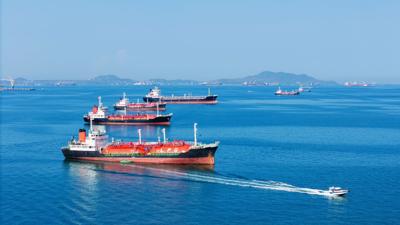


LPG gas and oil tanker ships anchored in the ocean near Strait of Hormuz. (Shutterstock photo by GreenOak)
After months of conflict, diplomacy appears to be gaining the upper hand in the standoff involving Iran, the United States and one of the world's most critical shipping lanes, the Strait of Hormuz.
According to reports from the Associated Press, Fox News and other international outlets, President Donald Trump announced on Sunday, June 14, that a deal with Iran has been reached and is expected to be formally signed later this week. The agreement, set to be signed on Friday, June 19, in Geneva, would extend the current ceasefire, reopen the Strait of Hormuz and launch a new round of negotiations focused on Iran's nuclear program.
Subscribe to Chicago Star’s Weekly City Buzz Newsletter
The Strait of Hormuz is a narrow waterway connecting the Persian Gulf to the Gulf of Oman, but its importance is enormous. Roughly one-fifth of the world's oil and liquefied natural gas shipments typically pass through the channel, making it one of the most strategically important maritime routes on the planet. Any disruption there can quickly send shockwaves through global energy markets and drive up fuel prices worldwide.
The waterway has been at the center of tensions since war erupted between the United States, Israel and Iran earlier this year. Military strikes, threats against commercial shipping and competing claims about whether the strait was open or closed created uncertainty for global trade and energy supplies.
More Chicago Star articles:
• Navy Pier unveils largest summer programming lineup ever
• Historic Gold Coast mansion with Playboy history for sale
• A Chicago summer tradition: Gold Coast Art Fair returns
• Chicago Gourmet announces return of fan favorite culinary events
Now, negotiators say a framework agreement has been reached. Under the reported terms, military operations would end, the Strait of Hormuz would reopen to normal commercial traffic and talks would begin on several unresolved issues, including Iran's stockpile of highly enriched uranium. Pakistan and Qatar reportedly played key roles in helping broker the agreement.
While the announcement has been welcomed by energy markets and world leaders, significant questions remain. Details of the agreement have not yet been released publicly, and some critics argue that major issues involving Iran's nuclear ambitions and regional influence have merely been postponed rather than resolved. Israeli officials have also expressed concerns about whether the agreement adequately addresses Iran's missile capabilities and support for regional proxy groups.
For consumers, the most immediate impact could be at the gas pump. Reopening the Strait of Hormuz would help stabilize global oil supplies and could ease pressure on energy prices that have been elevated throughout the conflict. Analysts will be watching closely to see whether the deal holds and whether commercial shipping fully resumes through the vital corridor.
For now, the world is waiting for the formal signing ceremony and the next chapter in a crisis that has kept governments, markets and military leaders on edge for months.
Sources:
https://apnews.com/article/iran-us-war-ceasefire-deal-e0a9e4e1152ea8da10ea066ad174a23a
https://www.foxnews.com/live-news/trump-iran-war-peace-talks-pakistan-june-14




(0) comments
Welcome to the discussion.
Log In
Keep it Clean. Please avoid obscene, vulgar, lewd, racist or sexually-oriented language.
PLEASE TURN OFF YOUR CAPS LOCK.
Don't Threaten. Threats of harming another person will not be tolerated.
Be Truthful. Don't knowingly lie about anyone or anything.
Be Nice. No racism, sexism or any sort of -ism that is degrading to another person.
Be Proactive. Use the 'Report' link on each comment to let us know of abusive posts.
Share with Us. We'd love to hear eyewitness accounts, the history behind an article.