
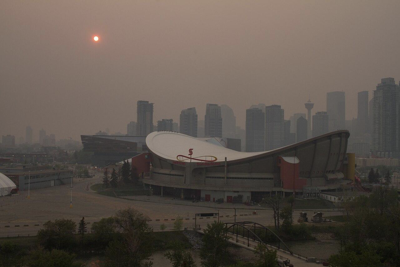

Smoke from more than 830 Canadian wildfires is descending on the U.S., according to ABC News, creating dangerous air quality for millions across the Midwest and Northeast as it spreads from the Great Lakes to New England. The wind is pushing the plume into the U.S., where it will coincide with an extreme heat spell that could push temperatures into the triple digits, reports say.
According to The Washington Post, the largest fire, located in Wabakimi Provincial Park, has consumed more than 130,000 acres.
Health risks and safety measures
Air quality alerts now cover the entire states of Wisconsin and Michigan, extending from Minnesota to New York City, ABC News noted. The smoke is forecast to reach Buffalo, Detroit, and Philadelphia by Wednesday sunset, potentially hitting Boston by Thursday morning. Officials warn that the conditions may reach a dangerous level for everyone, not just those with respiratory issues like asthma.
Subscribe to Chicago Star’s Weekly City Buzz Newsletter
Experts recommend avoiding strenuous outdoor activities, especially for those with heart or respiratory conditions, according to the Michigan Department of Environmental Quality, per The Washington Post. “Keep windows closed overnight to prevent smoke from getting indoors and, if possible, run central air conditioning with MERV-13 or higher-rated filters,” the department said, according to the report.
Residents should also consider wearing an N95 mask if they must go outside, as advised by health experts.
Read more on Chicago Star
Float responsibly: Get ready for Chicago’s largest boat party in the Playpen
Oregon AG drops delay bid on $111B Paramount-Warner Bros. merger
Bottoms up! Two Chicago beer festivals in July: Horner BrewFest & Ravenswood on Tap
Top July concerts in Chicago: Lil Wayne, Hilary Duff, Lollapalooza & more
Comparison to 2023 events
While the smoke will create hazy skies, New York City Emergency Management stated that “current forecasts do not indicate a repeat of 2023 conditions,” when air quality reached a record hazardous peak of 465, The Washington Post reported. However, the simultaneous arrival of high heat creates unique “environmental health challenges.”
Rain expected on Friday in the Midwest and Saturday in the Northeast should help disperse some of the smoke, though wind flows will continue blowing varying intensities of smoke into the region through Friday.




(0) comments
Welcome to the discussion.
Log In
Keep it Clean. Please avoid obscene, vulgar, lewd, racist or sexually-oriented language.
PLEASE TURN OFF YOUR CAPS LOCK.
Don't Threaten. Threats of harming another person will not be tolerated.
Be Truthful. Don't knowingly lie about anyone or anything.
Be Nice. No racism, sexism or any sort of -ism that is degrading to another person.
Be Proactive. Use the 'Report' link on each comment to let us know of abusive posts.
Share with Us. We'd love to hear eyewitness accounts, the history behind an article.